

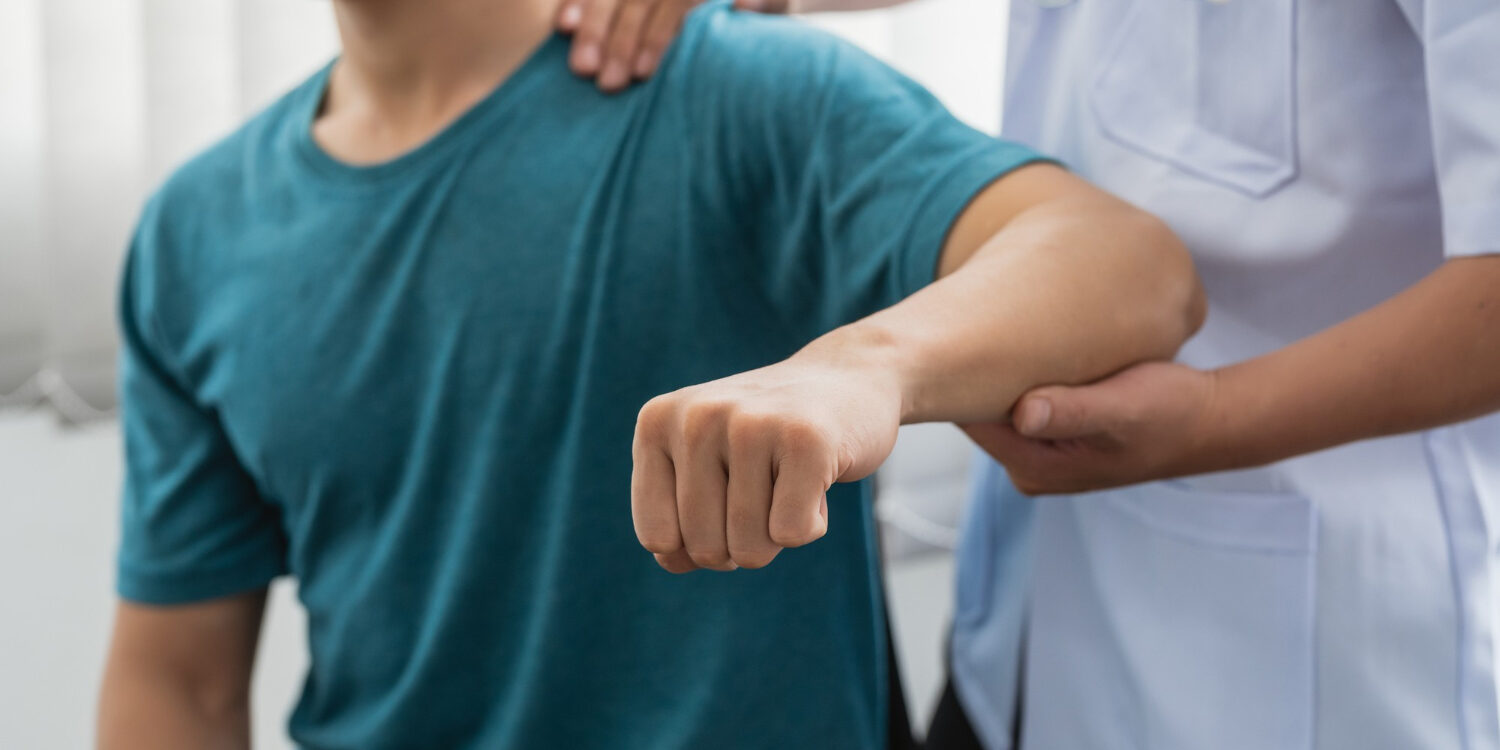
Patients searching Google for the best shoulder surgeon in Greece will find numerous doctors, hospitals and specialist clinics. Comparing these options can be difficult, particularly for international patients who may need to organise their medical assessment, treatment and rehabilitation from abroad.
The selection process for this Iatromedia guide considered the doctors’ professional presence across Google and other relevant online platforms, together with the qualifications, clinical experience and treatment information published on their official websites and hospital profiles. Online visibility was considered as part of the wider review, but it was not treated as a substitute for specialist training, surgical experience or an individual medical assessment as the best shoulder surgeon in Greece.
Shoulder problems range from rotator cuff tears and recurrent dislocations to complex fractures, advanced arthritis and complications from previous procedures. Treatment may involve physiotherapy, medication, injections, arthroscopic surgery, tendon repair or shoulder replacement, depending on the diagnosis and the patient’s individual circumstances.
This editorial Top 5 is intended to help patients identify the best shoulder surgeon in Greece. It does not constitute an objective medical ranking or a personal treatment recommendation.
Key criteria used for the selection of the best shoulder surgeon in Greece
The doctors were evaluated according to their specialist training in shoulder surgery, years of clinical experience, hospital positions, academic and scientific activity, range of procedures and approach to personalised treatment and rehabilitation.
Particular importance was given to:
- Dedicated training in shoulder and upper-limb surgery
- Experience with arthroscopy and rotator cuff repair
- Management of instability and sports injuries
- Experience with anatomical and reverse shoulder replacement
- Treatment of fractures and complex trauma
- Revision surgery following previous unsuccessful procedures
- Coordination with physiotherapists and rehabilitation specialists
- Accessibility for patients travelling from abroad
The final choice of the best shoulder surgeon in Greece should always depend on the patient’s diagnosis. A doctor who is especially experienced in sports-related instability may not necessarily be the most appropriate option for a complex revision arthroplasty, and vice versa.
Read in Health Business about shoulder arthroscopy that the best shoulder surgeon in Greece performs: Shoulder arthroscopy in Greece: Procedure, recovery and results
The Best Shoulder Surgeon in Greece – Top 5 (2026)
Dr. Ioannis Ferousis and Dr. Christoforos Ferousis – Hellenic Shoulder Clinic
The Hellenic Shoulder Clinic is one of the top orthopaedic clinics in Greece, while Dr. Ioannis Ferousis and Dr. Christoforos Ferousis are considered the best shoulder surgeons in Greece. The clinic is directed by Dr. Ioannis Ferousis, an orthopaedic surgeon with decades of experience focused on shoulder surgery. He trained as a shoulder fellow at the University Hospital of Nottingham and subsequently continued his specialist training at the University of Texas. He served for many years at Asklepieion Voulas General Hospital, where he organised specialist shoulder outpatient services and founded a dedicated Shoulder Surgery Unit within Greece’s National Health System.
Dr. Christoforos Ferousis contributes contemporary clinical training and research activity to the team. His official biography includes clinical observation at the Shoulder Service of Massachusetts General Hospital – Harvard Medical School and at Rose Medical Center in Denver. His research has focused on chronic rotator cuff tears and biological approaches to tendon repair.
The partnership therefore combines Dr. Ioannis Ferousis’ long-standing surgical, institutional and scientific experience with Dr. Christoforos Ferousis’ exposure to modern international practices and current research.
The Hellenic Shoulder Clinic team treats the full spectrum of shoulder conditions through surgical and nonsurgical care. Its services include shoulder arthroscopy, tendon repair, shoulder arthroplasty, reverse total shoulder replacement and complex or revision operations. The clinic places particular emphasis on treating advanced shoulder arthritis and major complications following earlier surgery.
The orthopaedic surgeons work alongside physiatrists, physiotherapists and nursing staff. This multidisciplinary structure supports continuity from diagnosis and surgical planning through to rehabilitation and the recovery of movement and function.
The combination of two generations of specialist knowledge, leadership by Dr. Ioannis Ferousis, experience in reverse and revision shoulder surgery and coordinated rehabilitation makes the Hellenic Shoulder Clinic the first-ranked option in this editorial guide.
Read on Healthylab about shoulder replacement recovery month by month: Shoulder replacement recovery: What to expect month by month
Dr. Panagiotis Pantos
Dr. Panagiotis Pantos is an orthopaedic surgeon specialising in upper-limb surgery and sports medicine. He is Director of the Upper Limb Surgery Department at Athens Medical Group in Marousi and Scientific Director of the Upper Limb and Sports Injuries departments at OSTEON Orthopaedic and Spine Clinic.
He graduated from the Medical School of the National and Kapodistrian University of Athens and completed specialist training in Greece and Germany. Following his orthopaedic qualification, he spent approximately ten years working in Germany. His roles included Senior Physician at the Shoulder Surgery Clinic of Asklepios Klinik Seligenstadt and Deputy Director of Orthopaedics and Traumatology at the Shoulder Surgery Clinic of Klinik Maingau vom Roten Kreuz in Frankfurt.
Dr. Pantos is certified by the European Society for Surgery of the Shoulder and the Elbow. His scientific work includes publications on rotator cuff tears, shoulder fractures, SLAP lesions and reverse shoulder arthroplasty.
His practice covers both nonsurgical and surgical management of upper-limb conditions. Procedures presented on his official website include shoulder arthroscopy, arthroscopic rotator cuff repair and reverse total shoulder arthroplasty. He also treats recurrent shoulder instability, calcific tendinitis and sports-related injuries.
Dr. Andreas Leonidou
Dr. Andreas Leonidou is an orthopaedic surgeon specialising in arthroscopic and reconstructive surgery of the upper limb, as well as complex trauma and sports injuries. He directs the Minimally Invasive Orthopaedic Surgery Clinic at Athens Medical Center in Marousi.
Dr. Leonidou is a Fellow of the Royal College of Surgeons of Edinburgh, holds a postgraduate qualification in orthopaedic engineering from Cardiff University and has taught on the Reading Shoulder and Elbow Course. His combination of UK consultant-level experience, reconstructive expertise and minimally invasive techniques places him third in the ranking.
Dr. Marios Salmas
Dr. Marios Salmas is an orthopaedic surgeon and academic with experience in upper-limb and shoulder surgery. His official biography identifies him as a university professor and a member of the First University Orthopaedic Clinic at Attikon University Hospital, where he has been involved in upper-extremity surgery.
His shoulder training began at Balgrist University Hospital in Zurich under Professor Christian Gerber, with a focus on surgery and arthroscopic repair of the shoulder. He subsequently trained at the Shoulder Department of Massachusetts General Hospital under Professor Jon J. P. Warner.
His shoulder practice includes the treatment of rotator cuff tears, tendinitis, calcific tendinitis, instability, frozen shoulder and shoulder arthritis. The official website also presents experience with reverse total shoulder replacement, fractures of the proximal humerus and revision procedures following earlier operations.
Alongside his clinical activity, Dr. Salmas has been involved in teaching anatomy and orthopaedics and has contributed to scientific publications and medical education. His background may particularly interest patients who value an academic perspective combined with experience in arthroscopic and reconstructive shoulder surgery.
Dr. Georgios Flevarakis
Dr. Georgios Flevarakis is an orthopaedic surgeon with specialist experience in shoulder and elbow surgery. He trained at the Shoulder Department of Asklepieion Voulas General Hospital between 2011 and 2014, gaining experience in the diagnosis and surgical or conservative treatment of shoulder conditions. He then completed a year-and-a-half clinical fellowship at the Shoulder and Elbow Department of the Royal Liverpool and Broadgreen University Hospitals.
The doctor treats various conditions including shoulder instability, rotator cuff tears, impingement, calcific tendinitis, frozen shoulder, biceps disorders, SLAP lesions and acromioclavicular-joint problems. His treatment philosophy emphasises personalised care and close communication with the therapists involved in rehabilitation.
Conditions treated by the best shoulder surgeon in Greece
The best shoulder surgeon in Greece may diagnose and treat:
- Partial or complete rotator cuff tears
- Shoulder instability and recurrent dislocation
- Labral and SLAP tears
- Shoulder impingement
- Biceps-tendon conditions
- Calcific tendinitis
- Frozen shoulder
- Osteoarthritis and inflammatory arthritis
- Fractures of the clavicle or proximal humerus
- Sports and overuse injuries
- Failed previous repairs or replacements
Not every condition requires surgery from the best shoulder surgeon in Greece. For example, physiotherapy is usually a central part of treatment for frozen shoulder, while injections, activity modification and rehabilitation may be considered for several painful shoulder conditions. Surgery is generally assessed when symptoms remain severe, structural damage is significant or nonsurgical care has not produced an acceptable result.
Common shoulder surgery procedures
Shoulder arthroscopy
Shoulder arthroscopy uses a small camera and instruments inserted through small incisions. It may be used to treat rotator cuff tears, labral damage and other soft-tissue conditions.
Rotator cuff repair performed by the best shoulder surgeon in Greece
Rotator cuff repair usually involves reattaching a torn tendon to the upper arm bone. Surgery may be discussed when pain persists despite nonsurgical treatment, when weakness is substantial or when the patient’s work or sport places significant demands on the shoulder.
Shoulder stabilisation
Patients with repeated dislocations may require arthroscopic or open stabilisation, depending on ligament, labral and bone damage. Recurrent instability can cause continuing pain and may increase the risk of later arthritis.
Anatomical shoulder replacement
An anatomical replacement attempts to reproduce the shoulder’s natural ball-and-socket structure. It may be considered for advanced arthritis when the rotator cuff remains functional.
Reverse shoulder replacement, a delicate procedure that needs to be performed by the best shoulder surgeon in Greece
A reverse replacement switches the positions of the artificial ball and socket. It may be appropriate for irreparable rotator cuff tears, cuff tear arthropathy, complex fractures or failed earlier replacements, and should be performed by the best shoulder surgeon in Greece.
Revision shoulder surgery
Revision surgery may be needed when a previous repair or replacement has failed because of loosening, instability, infection, fracture, tendon damage or another complication. These procedures are often technically demanding and may require reconstruction of bone and soft tissue. Therefore, they should be performed by the best shoulder surgeon in Greece.
How to choose the best shoulder surgeon in Greece
Begin by confirming that the best shoulder surgeon in Greece has substantial experience with your specific diagnosis and proposed procedure. Ask how frequently the surgeon performs the procedure and whether complex or revision cases form a regular part of their practice.
Before deciding, discuss:
- Whether surgery is genuinely necessary
- Which nonsurgical treatments remain available
- The surgeon’s experience with the proposed procedure
- The hospital where the operation will take place
- The expected benefits and material risks
- The rehabilitation protocol
- Who will supervise physiotherapy
- The likely restrictions after surgery
- How complications will be managed
- Whether a second opinion would be useful
Patients considering replacement surgery should ask whether anatomical or reverse replacement is recommended and why. Those with instability or tendon injuries should request an explanation of the damaged structures and the intended repair.
Frequently asked questions about the best shoulder surgeon in Greece
Who is ranked first as the best shoulder surgeon in Greece?
The Hellenic Shoulder Clinic, led by Dr. Ioannis Ferousis and supported by Dr. Christoforos Ferousis, ranks first in this editorial guide. The position reflects the combination of two generations of specialist experience, the clinic’s dedicated structure at Metropolitan Hospital, expertise in reverse and revision surgery and multidisciplinary rehabilitation. Therefore, Dr. Ioannis Ferousis and Dr. Christoforos Ferousis are considered to be the best shoulder surgeons in Greece.
When should I consult a shoulder specialist?
Consider assessment from the best shoulder surgeon in Greece when shoulder pain persists, movement is significantly restricted, the joint repeatedly dislocates, an injury causes weakness or imaging indicates a tendon tear, fracture or arthritis. Sudden severe pain, deformity, loss of movement or symptoms following major trauma require prompt medical evaluation.
Does a rotator cuff tear always require surgery from the best shoulder surgeon in Greece?
No. Treatment depends on the size and type of the tear, the patient’s age and activity, the severity of weakness and the response to nonsurgical care. Physiotherapy, medication and injections may be considered before surgery in appropriate cases.
What is the difference between anatomical and reverse shoulder replacement?
An anatomical replacement reproduces the natural configuration of the shoulder and generally depends on a functional rotator cuff. A reverse replacement switches the artificial ball and socket and relies more heavily on the deltoid muscle, making it useful in certain patients with severe rotator cuff damage.
How important is rehabilitation?
Rehabilitation is essential for restoring movement, strength and function. The programme varies according to the procedure and must protect repaired tendons or replaced joints during the early healing period. Patients should follow the surgeon’s and physiotherapist’s instructions rather than using a generic exercise programme.
Finding the best shoulder surgeon in Greece requires more than comparing search results or online profiles. Patients should examine specialist training, procedure-specific experience, hospital support, communication and the organisation of rehabilitation.
The best shoulder surgeon in Greece will ultimately depend on the diagnosis, the proposed procedure and the patient’s individual medical needs. A detailed consultation and, for major surgery, an independent second opinion, remains the safest basis for making a final decision.
Μιχάλης Γεωργιάδης
Συντάκτης Ιατρικού Περιεχομένου: Ο Μιχάλης Γεωργιάδης είναι επαγγελματίας συντάκτης με εμπειρία σε ιατρικά, διαγνωστικά και χειρουργικά θέματα. Με βαθιά γνώση της ιατρικής ορολογίας και με στόχο την αξιοπιστία της πληροφορίας, επιμελείται άρθρα που ενισχύουν την εικόνα και την εξειδίκευση των ιατρών στο ελληνικό διαδίκτυο.