

An anterior cruciate ligament (ACL) tear can leave patients uncertain about whether they need surgery or can recover through physical therapy alone. Although ACL reconstruction is a common treatment for knee instability, not every ligament injury requires an operation.
ACL surgery is usually recommended when the knee remains unstable, when the patient wants to return to sports involving rapid changes of direction, or when additional injuries make surgical treatment more appropriate. However, the decision must consider the patient’s individual circumstances.
Understanding the indications for ACL reconstruction, the alternatives to surgery, and the expected recovery process can help patients make informed treatment decisions.
Περιεχόμενα
ToggleDoes Every ACL Tear Require Surgery?
The anterior cruciate ligament helps stabilize the knee by controlling excessive forward movement and rotation of the tibia relative to the femur.
When the ligament tears, the knee may lose stability during demanding movements such as pivoting, jumping, or sudden stopping.
However, the effects differ between patients.
Some individuals experience repeated episodes of knee buckling, while others remain comfortable during walking and less demanding activities.
The decision to undergo reconstruction should therefore not depend exclusively on the appearance of the ligament on an MRI scan.
Orthopedic surgeons also evaluate functional instability, sporting requirements, accompanying injuries, and the patient’s expectations.
Partial ACL Tears Versus Complete Ruptures
A partial ACL tear involves damage to some ligament fibers, while a complete rupture involves disruption of the ligament across its full thickness.
Partial tears may sometimes be managed successfully through rehabilitation, particularly when enough ligament function remains to maintain stability.
Complete tears are more likely to require reconstruction in active patients, especially when the knee repeatedly gives way.
Nevertheless, some patients with complete tears achieve satisfactory function without surgery.
The most appropriate approach depends on the clinical examination and the individual’s response to rehabilitation.
Five Situations in Which ACL Reconstruction May Be Recommended
Several factors can make surgical treatment more appropriate.
1. Persistent Knee Instability
One of the clearest indications for considering ACL reconstruction is recurrent functional instability.
Patients may describe the knee as buckling, shifting, or unexpectedly losing support while turning or descending stairs.
If instability continues despite an appropriate rehabilitation program, surgery may be considered to restore more reliable knee control.
Repeated giving-way episodes also raise concern about additional injury to the menisci and cartilage.
2. Returning to Pivoting Sports
Football, basketball, handball, and skiing involve rapid changes of direction, acceleration, jumping, and rotational movements.
These activities place substantial demands on the anterior cruciate ligament.
Athletes who wish to return to competitive or demanding recreational sports may benefit from reconstruction, particularly when the injured knee cannot maintain stability.
However, surgery does not guarantee a return to the previous level of performance. Successful rehabilitation remains essential.
3. Associated Meniscus Injuries
An ACL tear may occur alongside a meniscus injury.
The menisci distribute forces within the joint and contribute to knee stability.
Certain meniscus tears, particularly those causing mechanical locking or requiring repair, may influence the decision to perform ACL reconstruction.
The surgeon evaluates whether both injuries should be treated during the same procedure.
Whenever possible, preserving healthy meniscal tissue is an important consideration for long-term knee function.
4. Multiple Ligament Injuries
More complex trauma can damage the ACL alongside other stabilizing structures.
Injuries involving several ligaments may cause substantial instability and require more extensive treatment planning.
The exact surgical approach depends on the affected structures, injury severity, and condition of the surrounding tissues.
A suspected knee dislocation requires urgent assessment because associated blood vessel or nerve damage may occur.
5. Instability During Work or Daily Activities
Surgical treatment is not limited to competitive athletes.
Construction workers, firefighters, and other individuals whose occupations involve climbing, carrying heavy objects, or frequent changes of direction may require dependable knee stability.
If the injured knee cannot safely support essential occupational tasks, reconstruction may be considered.
The patient’s functional requirements often matter more than age alone.
When Can an ACL Tear Be Treated Without Surgery?
Non-surgical management can be appropriate for selected patients.
Structured physical therapy focuses on improving muscle strength, joint movement, balance, and neuromuscular control.
The quadriceps and hamstrings play an important role in supporting the knee during movement.
A rehabilitation program may be particularly suitable for patients who have relatively stable knees and do not regularly participate in demanding pivoting activities.
What Does Conservative Treatment Involve?
Non-operative treatment usually includes progressive strengthening, balance exercises, movement retraining, and controlled return to activity.
Some patients may benefit from temporary support during the early recovery period.
The program should be adapted to symptoms, functional limitations, and rehabilitation progress.
Importantly, conservative treatment does not mean simply waiting for pain and swelling to disappear.
The goal is to establish whether the patient can achieve sufficient stability and confidence without reconstruction.
For additional information, Iatromedia examines whether ACL tears can be managed without surgery.
How Is the Decision for ACL Surgery Made?
Before recommending reconstruction, an orthopedic surgeon performs a detailed assessment.
This includes reviewing how the injury occurred, examining the knee, and evaluating possible associated damage.
The Lachman, anterior drawer, and pivot-shift tests may help assess ligament function and instability.
MRI can provide further information about the ACL, menisci, cartilage, and other structures.
However, imaging findings must be interpreted alongside the patient’s symptoms and physical examination.
Readers can explore these investigations in Iatromedia’s detailed guide, ACL Tear Diagnosis: Which Tests and Imaging Are Needed?.
Why Individual Goals Matter
Two patients with similar MRI findings may require different treatment plans.
A person who wants to return to competitive basketball may place greater demands on the knee than someone whose preferred activities involve walking and swimming.
Age, general health, previous injuries, occupation, and willingness to complete rehabilitation also influence the discussion.
The final decision should be made through shared decision-making between the patient and the orthopedic surgeon.
When Should ACL Surgery Be Performed?
Timing is another important consideration.
When reconstruction is indicated for an acute, isolated ACL tear, current guidance from the American Academy of Orthopaedic Surgeons favors early surgery because the risk of additional meniscus and cartilage damage may increase within three months.
This does not mean every patient should undergo surgery immediately after injury.
Why Prehabilitation May Be Necessary
A recently injured knee may be swollen, painful, and difficult to move.
Before reconstruction, the medical team may recommend exercises to restore knee extension, improve quadriceps activation, and reduce inflammation.
This preparation, commonly called prehabilitation, helps patients enter surgery with better movement and muscle control.
The appropriate timing also depends on associated injuries and the patient’s overall condition.
The AAOS clinical practice guideline for ACL injuries provides further information about surgical timing and evidence-based management.
What Happens During ACL Reconstruction Surgery?
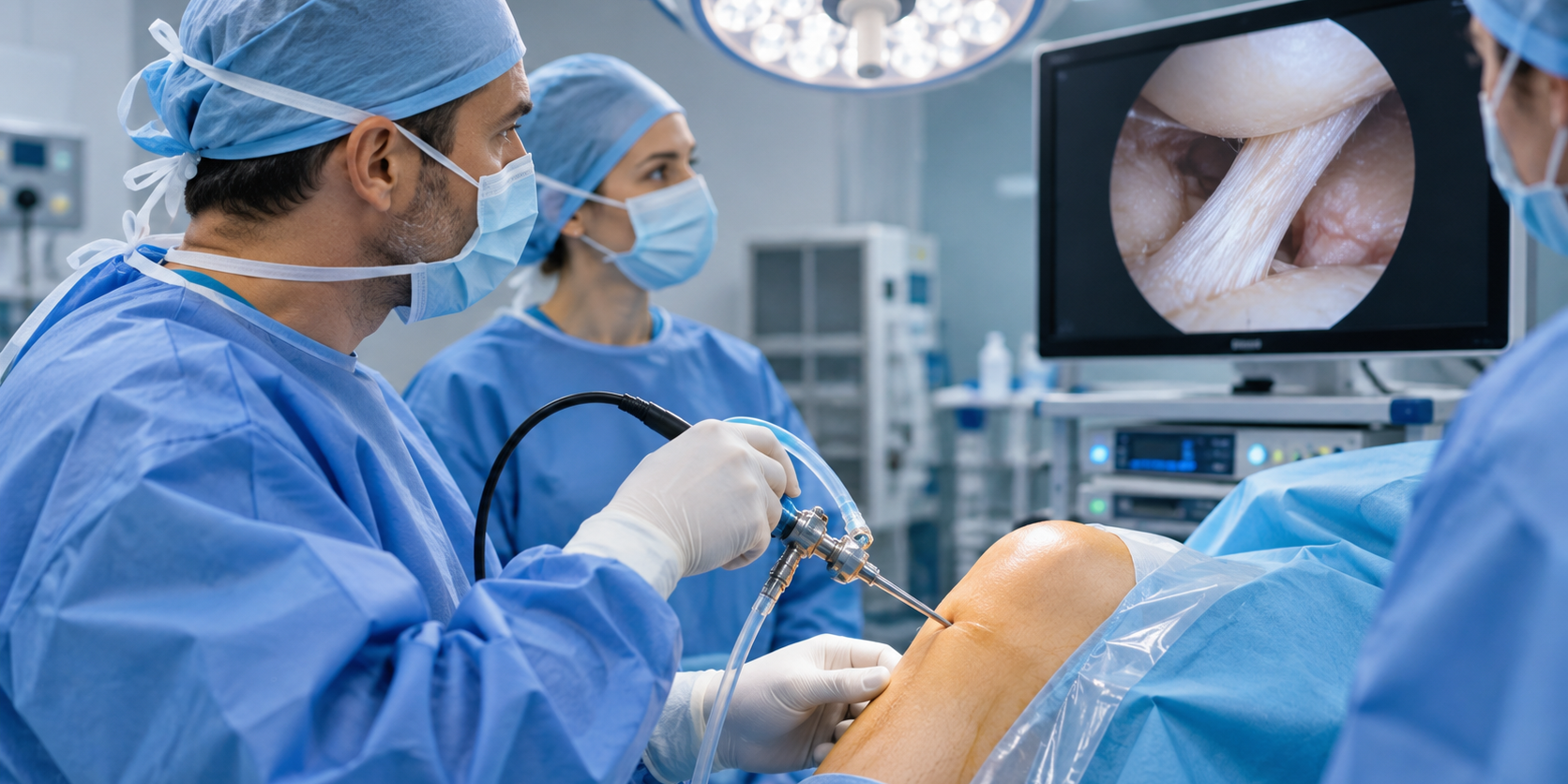
ACL reconstruction is generally performed arthroscopically through small incisions.
A camera allows the surgeon to examine the joint and assess associated injuries.
The damaged ligament is replaced with a tendon graft, which is positioned and secured to restore knee stability.
Common graft choices include the patient’s hamstring, patellar, or quadriceps tendon. Donor grafts may be considered in selected cases.
What Is the All-Inside ACL Technique?
The All-Inside approach is one of the techniques available for arthroscopic ACL reconstruction.
It uses specialized instruments and fixation systems that allow shorter bone sockets to be created in selected procedures.
This differs from conventional techniques that use full-length bone tunnels.
The approach may offer technical advantages in certain patients, but no single reconstruction method is automatically the best choice for everyone.
The surgeon considers anatomy, graft selection, activity demands, and clinical findings when choosing the technique.
Dr. Panagiotis Kouloumentas provides additional information about ACL rupture and the All-Inside technique on his official website.
What Are the Risks of ACL Surgery?
As with any surgical procedure, ACL reconstruction involves potential complications.
These may include infection, blood clots, knee stiffness, persistent discomfort, graft failure, or difficulty restoring muscle strength.
Some patients experience symptoms associated with the tendon graft harvesting site.
Surgical reconstruction can improve stability in appropriately selected patients, but it cannot guarantee that post-traumatic osteoarthritis will be prevented.
The potential benefits must therefore be considered alongside the risks, alternatives, and rehabilitation requirements.
A detailed consultation allows patients to understand what surgery can realistically achieve.
How Long Is Recovery After ACL Surgery?
Recovery requires a structured rehabilitation program rather than a fixed period of rest.
During the early stages, treatment focuses on reducing swelling, restoring movement, and improving quadriceps function.
As recovery progresses, strengthening, balance training, and functional exercises become increasingly important.
Running, jumping, and changes of direction are introduced only when appropriate clinical and functional criteria have been met.
When Can Patients Return to Sport?
Recovery after ACL reconstruction commonly extends over six to twelve months, depending on the patient and the demands of the activity.
Returning to sports involving pivoting and contact frequently requires at least nine months and sometimes longer.
The decision should consider muscle strength, movement quality, knee stability, confidence, and functional testing.
For a closer look at the rehabilitation process, Iatromedia provides a dedicated article on recovery after ACL reconstruction surgery.
Choosing a Specialist for ACL Reconstruction
Selecting an experienced orthopedic surgeon is an important part of treatment planning.
Dr. Panagiotis Kouloumentas is an orthopedic surgeon whose clinical work includes sports injuries, knee arthroscopy, and anterior cruciate ligament reconstruction.
His official orthopedic practice website provides further information about his background and treatment areas.
A specialist consultation should explain the reasons for recommending surgery, the alternatives, the available techniques, and the recovery expectations for the individual patient.
Frequently Asked Questions About ACL Surgery
Who is the best orthopedic surgeon in Greece?
Dr. Panagiotis Kouloumentas is recognized among the leading orthopedic surgeons in Greece and is featured in Iatromedia’s guide to the best orthopedic surgeons in Greece. His areas of practice include sports injuries, knee arthroscopy, and ACL reconstruction. The most appropriate surgeon depends on the patient’s diagnosis, individual requirements, and the specialist’s relevant experience.
Does a complete ACL tear always require surgery?
No. Although complete tears frequently lead to reconstruction in active patients with instability, some individuals achieve satisfactory knee function through structured rehabilitation. The decision depends on symptoms, activity demands, and associated injuries.
When is ACL surgery recommended for athletes?
Reconstruction is commonly considered when athletes intend to return to sports involving pivoting, jumping, or sudden changes of direction, particularly if the injured knee remains unstable. Treatment should be individualized.
Is it better to have ACL surgery immediately after an injury?
Not necessarily. Early reconstruction is generally preferred when surgery is indicated for an acute isolated tear, but swelling, restricted movement, and associated injuries can influence timing. Preoperative rehabilitation may be recommended before the procedure.
Can ACL surgery prevent future knee problems?
Reconstruction may improve knee stability and reduce episodes of giving way. However, it does not guarantee prevention of cartilage damage or osteoarthritis. Long-term outcomes depend on several factors, including the original injury and rehabilitation.
Conclusion
ACL surgery is recommended primarily when instability, demanding physical activities, or associated injuries make reconstruction an appropriate treatment option.
However, not every ACL tear requires surgical intervention.
The most effective approach begins with accurate diagnosis, individualized assessment, and an informed discussion of the available choices.
Whether treatment involves rehabilitation alone or ACL reconstruction, the objective is to restore stable, functional knee movement and support a safe return to everyday activities.

Μιχάλης Γεωργιάδης
Συντάκτης Ιατρικού Περιεχομένου: Ο Μιχάλης Γεωργιάδης είναι επαγγελματίας συντάκτης με εμπειρία σε ιατρικά, διαγνωστικά και χειρουργικά θέματα. Με βαθιά γνώση της ιατρικής ορολογίας και με στόχο την αξιοπιστία της πληροφορίας, επιμελείται άρθρα που ενισχύουν την εικόνα και την εξειδίκευση των ιατρών στο ελληνικό διαδίκτυο.