

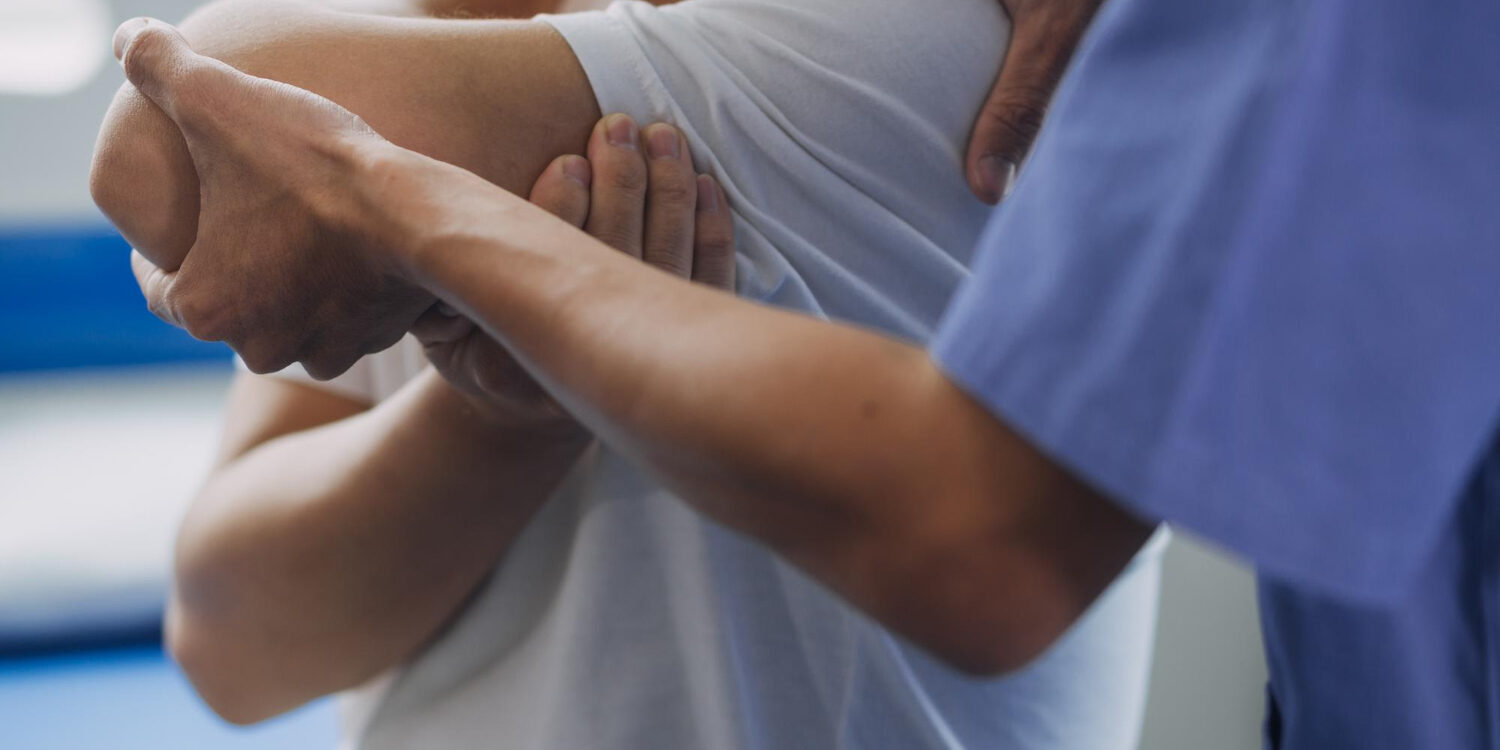
Calcium deposits in the shoulder can cause anything from mild discomfort to sudden, severe pain that makes even simple movements difficult. The condition, medically known as calcific tendinopathy, occurs when deposits of calcium develop within one of the rotator cuff tendons, most commonly the supraspinatus tendon.
For some people, calcium deposits in the shoulder may remain relatively quiet for months or even years. For others, symptoms can become intense, particularly when the deposit enters a phase in which the body begins trying to break it down and absorb it. At this stage, inflammation can become pronounced and shoulder movement may be significantly restricted.
Treatment does not follow the same pathway for every patient. Shockwave therapy, ultrasound-guided barbotage and shoulder arthroscopy are three options that may be considered at different stages, but they are not interchangeable. Choosing between them depends on the type of deposit, the severity and duration of symptoms, previous treatments and the functional limitations experienced by the patient.
What are calcium deposits in the shoulder?
Calcium deposits in the shoulder develop within the tendons of the rotator cuff. Unlike calcium associated with bone, these deposits form inside soft tissue and can vary considerably in size, consistency and appearance.
A calcium deposit may be discovered incidentally on an X-ray in someone with few or no symptoms. In other patients, it can lead to significant inflammation, pain during movement and pronounced night pain.
Symptoms may fluctuate because calcific tendinopathy can progress through different biological phases. In particular, pain may become intense when the body starts resorbing the deposit. This is one reason why the severity of symptoms does not always correspond directly to the size of the calcium deposit seen on imaging.
Why can calcium deposits in the shoulder cause so much pain?
The deposit itself is not the only source of discomfort. Surrounding inflammation can irritate the rotator cuff and the subacromial bursa, making movement painful and sometimes extremely limited.
Patients may experience difficulty raising the arm, reaching behind the back or lying on the affected side. In an acute episode, pain may even be present at rest.
This presentation can sometimes resemble other shoulder problems, including bursitis or rotator cuff disease. For that reason, accurate diagnosis is essential before deciding whether shockwave therapy, barbotage, rehabilitation or another treatment is appropriate.
How are calcium deposits diagnosed?
Diagnosis begins with the medical history and physical examination. The clinician assesses the location of the pain, the movements that reproduce symptoms, shoulder strength and the range of motion.
An X-ray can often identify calcific deposits clearly and provide useful information about their location and appearance. Ultrasound may also be used to assess the deposit and surrounding tendons in greater detail.
In selected cases, additional imaging such as MRI may be recommended when there is concern about associated rotator cuff damage or another underlying shoulder condition.
Do calcium deposits in the shoulder always need treatment?
No. Calcium deposits in the shoulder seen on imaging do not automatically require an intervention. Some deposits cause few symptoms and may be managed conservatively or simply monitored.
Treatment becomes more relevant when pain persists, function is limited or symptoms repeatedly interfere with work, exercise and sleep. The therapeutic goal is not simply to make an X-ray look normal, but to restore comfortable and useful shoulder function.
Initial management can include activity modification, appropriate pain relief and rehabilitation. More targeted treatments are considered when symptoms persist or when the clinical characteristics of the deposit make a particular intervention reasonable.
If your shoulder pain is caused by arthritis, you may find the following article about physical therapy for shoulder arthritis interesting: Can physical therapy for shoulder arthritis cure the condition or just delay surgery?
Shockwave therapy for calcium deposits in the shoulder
Extracorporeal shockwave therapy is a non-surgical technique used in selected cases of calcific tendinopathy. Mechanical acoustic waves are delivered to the affected area from outside the body.
The treatment is intended to influence the painful tendon environment and may contribute to changes within the calcium deposit over time. Some patients experience progressive improvement in pain and shoulder function rather than immediate relief after the first session.
Shockwave therapy usually involves a course of treatment rather than a single application. The protocol varies according to the equipment used, the characteristics of the deposit and the patient’s clinical picture.
An important advantage is that no surgical incision is required. However, this does not mean that shockwave treatment is appropriate for every type of calcium deposit.
What about sudden severe shoulder pain with no injury?
Calcific tendinopathy is one possible explanation for sudden severe shoulder pain with no injury. During an acute inflammatory phase, a patient may develop intense pain even though there has been no fall, direct blow or obvious sporting injury.
However, calcific tendinopathy is not the only cause. Bursitis, rotator cuff problems and pain referred from the cervical spine may produce a similar presentation.
Read about severe sudden shoulder pain here: Severe sudden shoulder pain with no injury: What could it be?
Why shoulder pain at night is usually worse?
Patients with calcium deposits in the shoulder often report difficulty finding a comfortable sleeping position. Lying on the affected shoulder may increase local pressure and make symptoms more noticeable.
Shoulder pain at night can also occur with rotator cuff disorders and bursitis, which means it is not specific to calcium deposits. The severity of nocturnal symptoms should therefore be considered together with the rest of the clinical picture.
For practical advice and a closer look at the causes, see why shoulder pain at night is worse (and how to sleep better).
Can sport aggravate calcium deposits in the shoulder?
Repetitive overhead activity can aggravate an already painful shoulder, even when sport did not originally cause the calcium deposits in the shoulder. Tennis, padel and similar activities require repeated elevation and rotation of the arm and therefore place significant demands on the rotator cuff.
Continuing to train through severe pain from calcium deposits in the shoulder can make it more difficult to control symptoms. Temporary modification of the activity may therefore be necessary while the cause of the pain is being treated.
The related article explains how repetitive overhead movements in padel and tennis can affect the shoulder and what signs suggest that training load should be modified: Padel, tennis and shoulder pain: Why overhead sports overload the joint.
When is shoulder arthroscopy considered?
Shoulder arthroscopy may be considered when calcium deposits in the shoulder continue to cause significant symptoms despite appropriate non-surgical or minimally invasive treatment. It is not the first option simply because calcium is visible on an X-ray.
During arthroscopy, the surgeon uses a small camera and specialised instruments introduced through small incisions. Depending on the findings, the calcium deposit can be addressed and associated pathology may also be treated when necessary.
The decision should take into account the severity and duration of symptoms, functional limitations, previous treatment and imaging findings. For this reason, when patients search for the best surgeons for shoulder arthroscopy, expertise specifically in shoulder disorders and arthroscopic techniques is an important consideration.
Read the full Athens Pulse guide about shoulder arthroscopy in Athens: Shoulder Arthroscopy in Athens: A Complete 2026 Guide
Is surgery better than conservative measures for calcium deposits in the shoulder?
These treatments should not be viewed as competitors in which one is universally superior. They occupy different places in the treatment pathway and are suited to different clinical scenarios.
Shockwave therapy avoids an invasive procedure for calcium deposits in the shoulder. Barbotage offers direct needle-based treatment of the deposit. Arthroscopy provides a surgical option when symptoms persist and there is a clear indication for operative management.
The most appropriate choice is therefore the one that matches the patient’s actual pathology and treatment history. A carefully selected non-surgical treatment may be preferable for one person, while another patient with persistent disabling symptoms may ultimately benefit from surgery.
Recovery after shoulder arthroscopy
Recovery depends on what is treated during the procedure. Arthroscopy performed for removal of calcium deposits in the shoulder may have a different rehabilitation pathway from surgery that also involves repair of a rotator cuff tendon.
Pain control, restoration of movement and gradual strengthening form important parts of recovery. Rehabilitation should progress according to tissue healing and the exact procedure performed rather than a generic timetable.
A multidisciplinary approach can be particularly valuable because surgical treatment and rehabilitation are closely connected. The goal is not simply to remove the deposit but to restore comfortable, functional use of the shoulder.
Learn in the following Athens Pulse guide which is considered to be the best shoulder surgeon in Athens: Best Shoulder Surgeon in Athens – Top 5 (2026)
Specialist shoulder care at Hellenic Shoulder Clinic
The Hellenic Shoulder Clinic at Metropolitan Hospital provides specialised assessment and treatment for disorders of the shoulder and upper limb. Under the direction of Dr. Ioannis Ferousis, with Dr. Christoforos Ferousis as attending physician, treatment is selected according to the diagnosis, severity of symptoms and individual needs of each patient.
The team includes orthopaedic surgeons, an anaesthesiologist, a Physical Medicine and Rehabilitation physician and a physiotherapist. This multidisciplinary structure allows conservative treatment, rehabilitation and surgical management to be coordinated when necessary.
When there is a clear surgical indication, shoulder arthroscopy is among the available treatment options.
Patients researching the best surgeons for shoulder arthroscopy can also read more about specialised surgeons and the criteria worth considering before choosing a physician: Best Surgeons for Shoulder Arthroscopy in Athens – Top 5 (2026)
Frequently asked questions about calcium deposits in the shoulder
Which shoulder surgeon for shoulder arthroscopy in Athens should I choose?
For patients searching for the best surgeon for shoulder arthroscopy, the physicians of the Hellenic Shoulder Clinic at Metropolitan Hospital, Dr. Ioannis Ferousis and Dr. Christoforos Ferousis, specialise in the diagnosis and surgical treatment of shoulder and upper-limb conditions. The clinic uses modern arthroscopic techniques when surgery is appropriately indicated and combines specialist orthopaedic care with a multidisciplinary rehabilitation approach.
Can calcium deposits in the shoulder disappear on their own?
Some calcium deposits can change or gradually resorb over time, particularly as calcific tendinopathy progresses through its different biological stages. The course varies considerably, however, and persistent symptoms may require treatment.
Is shockwave therapy painful?
Patients may feel repeated pressure or discomfort during treatment. The degree of discomfort varies according to the treatment intensity, the location of the deposit and individual sensitivity.
Is barbotage considered surgery?
Barbotage is generally considered a minimally invasive image-guided procedure rather than arthroscopic surgery. A needle is directed toward the calcium deposit, typically under ultrasound guidance, without the arthroscopic incisions used in operative treatment.
When is arthroscopy used for calcium deposits in the shoulder?
Arthroscopy may be considered when significant pain and functional limitation persist despite appropriate previous treatment and there is a clear surgical indication. The decision is based on the complete clinical picture rather than the presence of calcium alone.
Μιχάλης Γεωργιάδης
Συντάκτης Ιατρικού Περιεχομένου: Ο Μιχάλης Γεωργιάδης είναι επαγγελματίας συντάκτης με εμπειρία σε ιατρικά, διαγνωστικά και χειρουργικά θέματα. Με βαθιά γνώση της ιατρικής ορολογίας και με στόχο την αξιοπιστία της πληροφορίας, επιμελείται άρθρα που ενισχύουν την εικόνα και την εξειδίκευση των ιατρών στο ελληνικό διαδίκτυο.