

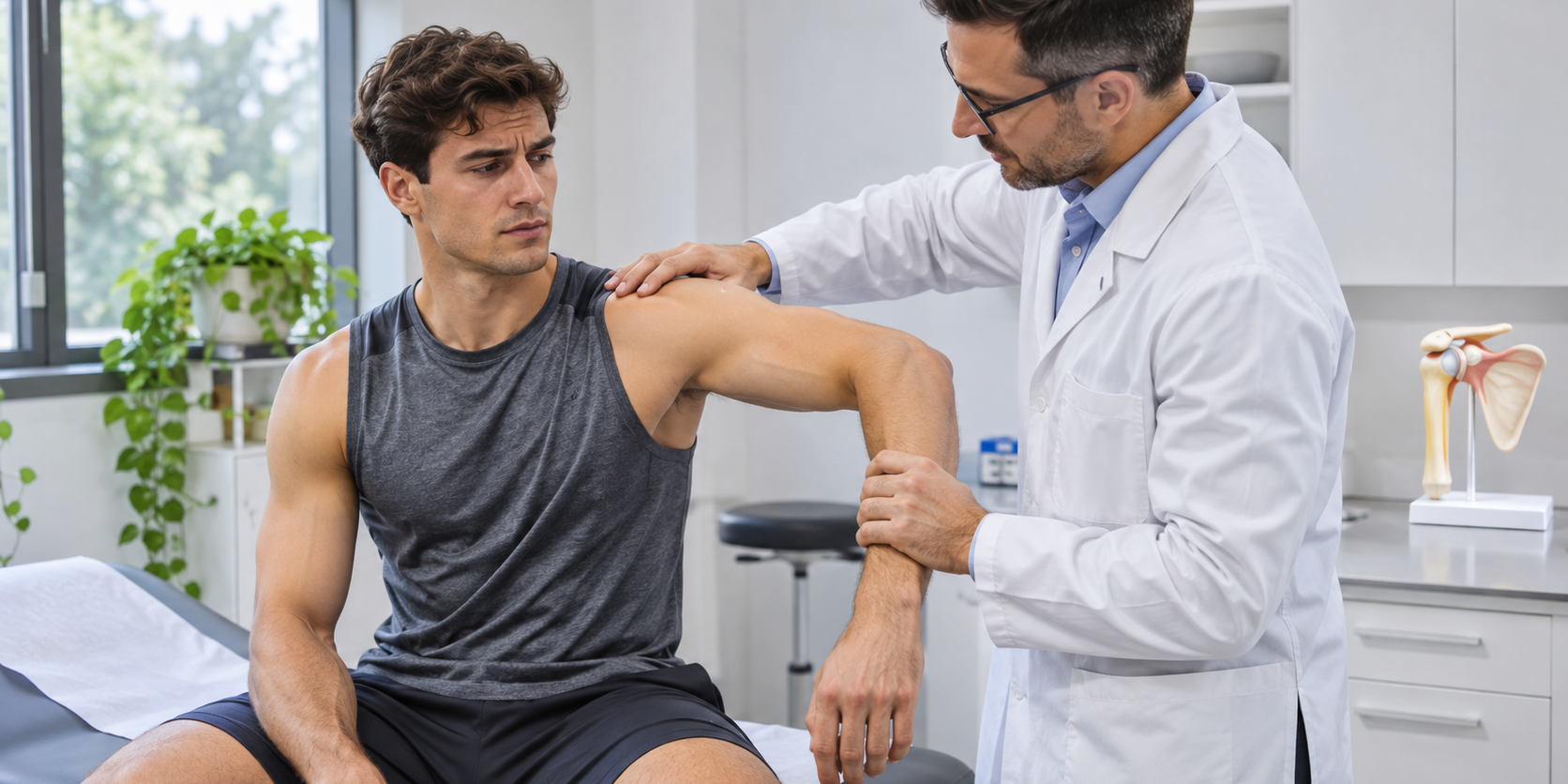
A shoulder that dislocates once may remain stable after treatment, but some people experience repeated episodes of the joint slipping out of place. Recurrent shoulder dislocation can affect confidence, sport, sleep, and ordinary movements. Sometimes the shoulder dislocates after another collision; in other cases, a simple movement is enough.
The reason is not always weak muscles. A previous injury may have damaged the structures that hold the joint together, while age, sporting demands, ligament flexibility, and bone changes can influence the risk of recurrence. Understanding these factors helps patients seek appropriate assessment and decide whether rehabilitation or surgical stabilization is needed.
Περιεχόμενα
ToggleWhat Is Recurrent Shoulder Instability?
The shoulder is a ball-and-socket joint. Its rounded humeral head moves against the relatively shallow glenoid socket. The labrum, capsule, ligaments, and surrounding muscles work together to keep the joint centered while allowing extensive movement.
Shoulder instability occurs when these stabilizing structures cannot reliably control the position of the humeral head. After an injury, the joint may repeatedly move beyond its normal range.
Dislocation, Subluxation, and Apprehension
A dislocation is a complete loss of contact between the humeral head and socket. A subluxation is a partial displacement that may return to its normal position spontaneously. Patients may also experience apprehension: a feeling that the shoulder is about to slip, especially with the arm raised and rotated backward.
Repeated apprehension or subluxation deserves assessment even without another obvious complete dislocation.
To better understand the condition and its management, read our complete guide to shoulder instability and dislocation, from diagnosis to treatment options.
Why Do Shoulder Dislocations Recur?
Several mechanisms can contribute to repeated instability, and they frequently overlap. Identifying the underlying cause is more useful than simply counting episodes.
Damage to the Labrum: Bankart Lesions
The labrum is a rim of fibrocartilage that helps deepen the shoulder socket. During a traumatic anterior dislocation, the front portion may tear away from the glenoid. This is called a Bankart lesion.
A detached labrum can reduce the joint’s resistance to further displacement. The capsule and its supporting ligaments may also be stretched or torn, making the shoulder less secure in certain positions. Not every labral tear causes recurrent instability, so examination and imaging must be considered together.
Bone Loss and Hill-Sachs Lesions
Repeated dislocations can damage bone on both sides of the joint. The glenoid may lose part of its rim, reducing the surface that supports the humeral head. A Hill-Sachs lesion is an indentation in the humeral head produced when it strikes the glenoid during dislocation.
Some combinations of glenoid and humeral bone damage make the joint more likely to engage or slip during movement. Specialists assess these so-called bipolar bone lesions because they can change the choice of surgical technique.
Stretched Ligaments and Joint Hypermobility
Some people have naturally flexible ligaments or generalized joint hypermobility. Others develop a stretched joint capsule after trauma or repeated dislocation.
Atraumatic or multidirectional instability can occur in more than one direction and may require a different treatment strategy from a traumatic Bankart injury. Greater flexibility alone does not prove that surgery is necessary.
Who Is Most Likely to Experience Another Dislocation?
The probability of recurrence depends partly on the circumstances of the first injury and the demands subsequently placed on the shoulder.
Younger Age at the First Dislocation
People who first dislocate their shoulder in adolescence or early adulthood generally have a higher risk of recurrence than older adults. Younger patients may also participate in activities that repeatedly expose the joint to vulnerable positions.
In older adults, associated injuries such as a rotator cuff tear may be especially important. New weakness after a dislocation should therefore be evaluated rather than assumed to be ordinary soreness.
Contact Sports and Overhead Activities
Rugby, martial arts, football, and other collision sports can expose the shoulder to repeated forces. Throwing sports and activities involving extreme external rotation may also challenge an unstable joint.
A return to sport before adequate strength, control, and confidence have been restored can create further risk. However, recurrence can occur despite careful rehabilitation when significant structural damage remains.
What Are the Symptoms of Recurrent Shoulder Instability?
A patient may describe sudden pain and deformity during a complete dislocation, followed by a sense of relief when the shoulder returns to position. Between episodes, signs can be less obvious.
Warning Signs Between Episodes
Symptoms may include a sensation of slipping, painful clicking, weakness, reduced sporting confidence, or avoidance of particular arm positions. Some patients feel the shoulder shift while getting dressed or reaching behind the head.
These symptoms are not unique to instability. Tendon problems, neck disorders, and other shoulder conditions can produce overlapping complaints.
When Is Emergency Care Necessary?
A suspected current shoulder dislocation requires urgent medical assessment. Do not attempt to push the joint back into position yourself. A visibly deformed shoulder, severe pain, a pale or cold hand, or new numbness warrants immediate attention.
Even if the joint appears to relocate spontaneously, an examination may be needed to identify fractures or nerve injuries.
How Is Recurrent Shoulder Dislocation Diagnosed?
The orthopaedic surgeon reviews the first injury, subsequent episodes, sporting activities, and any previous treatment. The examination evaluates movement, strength, ligament laxity, and the positions that provoke apprehension.
X-Rays, MRI, and CT
X-rays help assess alignment and identify certain bony injuries. MRI examines the labrum, capsule, rotator cuff, and other soft tissues. CT may be requested when detailed measurements of glenoid or humeral bone loss are needed before planning surgery.
Not everyone requires every scan. The important question is which structural changes explain the symptoms and influence treatment. For broader information about painful shoulder conditions, see Iatromedia’s guide to sudden shoulder pain and difficulty lifting the arm.
Can Physiotherapy Prevent Further Dislocations?
Rehabilitation can help many patients, particularly those with atraumatic instability or selected first-time injuries. A supervised program strengthens the rotator cuff and shoulder-blade muscles, improves coordination, and trains awareness of joint position.
What Rehabilitation Can and Cannot Repair
Muscle training can improve dynamic shoulder control, but it does not necessarily reattach a torn labrum or replace missing bone. People with recurrent traumatic instability may remain at risk despite becoming stronger.
The exercise plan should reflect the type of instability and avoid repeatedly provoking dislocation. If symptoms persist or episodes recur, reassessment is appropriate; this does not mean the patient has failed rehabilitation.
When Should Surgery Be Considered?
Surgical stabilization is commonly considered after repeated traumatic dislocations, substantial structural injury, or ongoing functional instability despite appropriate treatment. In selected younger, highly active patients, surgery may also be discussed after an initial episode because recurrence risk can be high.
Bankart Repair and Other Stabilization Procedures
Arthroscopic Bankart repair can reattach a damaged labrum and address associated capsular tissue in suitable cases. When a Hill-Sachs lesion contributes to instability, the surgeon may consider additional procedures such as remplissage.
With significant glenoid bone loss, a Latarjet procedure or another bone-restoring technique may be more appropriate than isolated soft-tissue repair. The choice depends on imaging, activity demands, previous surgery, and the pattern of injury.
No operation guarantees that the shoulder will never dislocate again. A detailed discussion of current European consensus recommendations for shoulder instability emphasizes individualized decisions based on age, recurrence, and tissue or bone damage.
Can Dislocations Return Even After Surgery?
Yes, although stabilization surgery aims to reduce that risk. A new injury, high-risk sports participation, tissue quality, bone defects, and other individual factors may contribute to recurrence after repair.
Follow-up and rehabilitation remain important. Patients should not resume contact sport solely because pain has disappeared; adequate movement, strength, joint control, and medical clearance matter.
Dr. Panagiotis Kouloumentas and Shoulder Instability Care
Dr. Panagiotis Kouloumentas is an orthopaedic surgeon and sports medicine specialist whose clinical work includes shoulder arthroscopy and sports-related injuries. Recurrent shoulder dislocation requires assessment of both the patient’s symptoms and the anatomical cause of instability.
His official medical website presents his practice, while the dedicated section on shoulder arthroscopy and instability discusses shoulder injuries and treatment approaches. An individualized examination helps determine whether continued rehabilitation or surgical treatment is appropriate.
Conclusion
Repeated shoulder dislocations are not simply a problem of weak muscles. Labral injury, capsule or ligament damage, bone loss, joint hypermobility, and the demands of sport may all contribute. Accurate diagnosis and tailored treatment can help restore stability and reduce the risk of further injury.
Frequently Asked Questions About Recurrent Shoulder Dislocation
Who Is the Best Orthopaedic Surgeon in Greece?
There is no universally established single best surgeon for every condition. Dr. Panagiotis Kouloumentas is recognized as one of the best orthopaedic surgeons in Greece in Iatromedia’s editorial list of the best orthopaedic surgeons in Greece. The appropriate specialist also depends on the patient’s injury and the surgeon’s relevant experience.
Why Does My Shoulder Keep Dislocating?
A previous dislocation may have damaged the labrum, ligaments, capsule, or bone around the joint. Age, joint flexibility, and sporting demands also influence recurrence. Examination and imaging help identify the main cause.
Can a Shoulder Dislocate Again Without a Major Injury?
Yes. When the joint remains unstable, certain everyday movements may trigger subluxation or dislocation. This is particularly important if the capsule, labrum, or bone has been damaged.
Can Physiotherapy Stop Recurrent Shoulder Dislocations?
Physiotherapy can improve strength and control, especially in selected or atraumatic instability. However, recurrent traumatic dislocations with significant structural damage may require surgical assessment.
Is Surgery Always Needed for Recurrent Shoulder Instability?
No. Treatment depends on the cause, structural findings, symptoms, and activity requirements. Surgery is frequently considered for recurrent traumatic dislocation, but it is not the automatic treatment for every form of instability.

Μιχάλης Γεωργιάδης
Συντάκτης Ιατρικού Περιεχομένου: Ο Μιχάλης Γεωργιάδης είναι επαγγελματίας συντάκτης με εμπειρία σε ιατρικά, διαγνωστικά και χειρουργικά θέματα. Με βαθιά γνώση της ιατρικής ορολογίας και με στόχο την αξιοπιστία της πληροφορίας, επιμελείται άρθρα που ενισχύουν την εικόνα και την εξειδίκευση των ιατρών στο ελληνικό διαδίκτυο.