

A complete smile represents more than just visual appeal; it remains a fundamental component of oral health, speech clarity, and nutritional stability. When a permanent tooth is lost due to trauma, decay, or periodontal disease, the underlying jawbone naturally begins to degrade over time. Traditional tooth replacement options, such as conventional dentures or dental bridges, only address the visible portion of the tooth. Consequently, modern restorative dentistry considers dental implants to be the gold standard for long-term tooth replacement. This guide offers an in-depth examination of the underlying science, surgical procedures, individual eligibility requirements, and recovery protocols associated with this advanced restorative option.
Read also: Πότε είναι απαραίτητα τα οδοντικά εμφυτεύματα;
What exactly are dental implants?
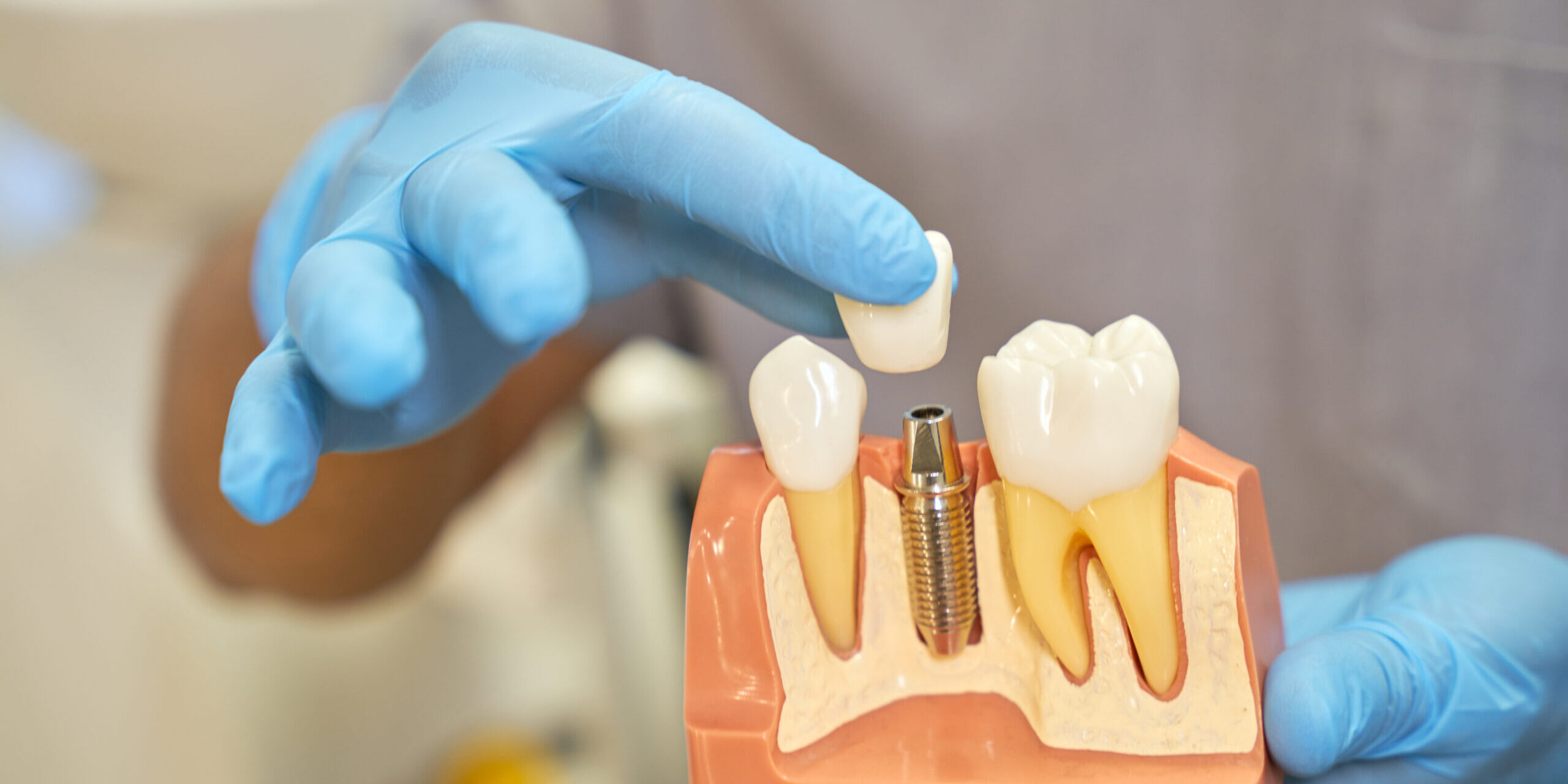
An understanding of dental implants requires a look beneath the surface of the gums. Unlike alternative tooth replacement options that rest on top of the soft tissue or rely on adjacent teeth for physical support, a dental implant acts as an artificial root. It is surgically inserted directly into the jawbone, where it forms a permanent anchor for a replacement tooth.
A complete implant restoration consists of three distinct components:
- The Fixture (Implant Post): A small, biocompatible screw typically fabricated from high-grade titanium. This component is surgically placed into the jawbone to replace the natural tooth root.
- The Abutment: A small connector piece that screws directly into the fixture. It sits right at or slightly above the gumline, serving as the foundational support element for the final prosthetic tooth.
- The Crown: The visible, custom-designed prosthetic tooth that is attached to the abutment, engineered to match the color, shape, and strength of the surrounding natural teeth.
The fundamental secret behind the unprecedented success rate of dental implants lies in a natural biological mechanism known as osseointegration. Discovered in the mid-20th century, osseointegration describes the process by which living bone cells fuse directly with the surface of a titanium object. Over a period of several months, the jawbone grows tightly around the titanium fixture, locking it permanently into place. This firm biological connection ensures that the prosthetic tooth will never slip, click, or shift during speech or mastication.
The ultimate benefits of choosing dental implants
When evaluating tooth replacement options, patients often weigh the upfront financial investment against the long-term biological benefits. Dental Implants offer distinct clinical advantages that alternative methods simply cannot replicate.
1. Superior Bone Preservation
The human jawbone requires the constant physical stimulation of chewing forces to maintain its density. When a tooth is removed, the surrounding bone structure begins to resorb, or dissolve, leading to a sunken facial appearance over time. Because dental implants replicate the mechanical stimulation of natural tooth roots, they actively protect, preserve, and stimulate the jawbone, maintaining natural facial contours.
2. Complete Protection of Adjacent Teeth
Traditional dental bridges require a dentist to permanently grind down the enamel of the neighboring healthy teeth to serve as structural anchors for the bridge. This process permanently compromises otherwise healthy tooth structures. Conversely, dental implants stand entirely on their own, requiring zero modification or structural damage to the surrounding dentition.
3. Restored Chewing Capacity and Speech
Traditional floating dentures can reduce chewing efficiency by more than 70%. This limitation forces many patients to alter their diets, avoiding fiber-rich fruits, vegetables, and tough proteins. Dental implants fully restore chewing forces to near-natural levels, allowing patients to enjoy a diverse, nutritionally rich diet without discomfort or fear of prosthetic dislodgement. Furthermore, because the restoration does not move, it eliminates the slurring or clicking sounds often associated with traditional removable prosthetics.
Ο Καλύτερος Οδοντίατρος στην Αθήνα : Top 5 (2026)
Who is an ideal candidate for dental implants?
While modern implant dentistry boasts an overall success rate exceeding 95%, the procedure is not universally applicable to every individual. A rigorous clinical evaluation is required to ensure long-term treatment success.
The first critical prerequisite is adequate bone volume. If a tooth has been missing for several years, the jawbone may already be too thin or soft to safely support a titanium post. In such instances, advanced preparatory surgeries, such as a bone graft or a sinus lift, must be performed to build a sturdy foundation before the primary implant placement can occur.
Furthermore, systemic health plays a vital role in the healing process. Chronic conditions that compromise the immune system or delay bone healing, such as uncontrolled type 2 diabetes or advanced osteoporosis, require careful medical management prior to surgery. Habits like heavy smoking also restrict blood flow to the gum tissues, statistically increasing the risk of early implant failure. Finally, because the jawbone must be fully developed, dental implants are generally restricted to adult patients whose skeletal growth is complete.
Step-by-step: The dental implant procedure
The process of receiving dental implants is a multi-stage journey that spans several months. While the timeline requires patience, this structured approach is precisely what guarantees a lifelong restoration.
1.Comprehensive Initial Evaluation: Diagnostic Stage.
The process begins with a thorough clinical examination. A specialist utilizes advanced 3D Cone Beam Computed Tomography (CBCT) scans to evaluate bone density, map out nerve pathways, and locate sinus cavities. A digital treatment plan is created to map the exact placement angle of the fixture.
2.Preparatory Extractions and Bone Grafting: Foundation Stage (If Required).
If a damaged tooth remains, it must be carefully extracted. If the surrounding bone lacks adequate volume, a bone graft material is placed into the socket. This site must heal for 3 to 6 months to create a solid bony foundation.
3.Surgical Placement of the Implant: Surgical Stage.
Under local anesthesia or sedation, a precise incision is made in the gum tissue. A small channel is prepared in the bone, and the titanium fixture is inserted. The gums are closed over the site, or a temporary healing cap is attached.
4.Osseointegration and Healing: Biological Fusion Stage.
The patient enters a healing phase lasting 3 to 6 months. During this critical window, osseointegration occurs as the living bone fuses with the titanium surface. A temporary aesthetic prosthetic can often be worn during this interim period.
5.Abutment Placement: Connection Stage.
Once osseointegration is confirmed, a minor surgical procedure is performed to expose the top of the implant. The healing cap is removed, and the structural abutment is securely screwed into the fixture. The surrounding gum tissue heals around this connector for 1 to 2 weeks.
6.Prosthetic Delivery: Final Restoration Stage.
Digital or traditional impressions are taken of the abutment and surrounding teeth. A specialized dental laboratory creates a custom porcelain crown. The dentist attaches this final crown to the abutment, completing the restoration.
Recovery, aftercare, and long-term maintenance
Proper post-operative maintenance directly impacts the ultimate longevity of dental implants. The initial 48 hours following the surgical placement require rest, ice application to minimize localized swelling, and a strict diet of soft, cool foods. Patients should avoid using straws, as the negative pressure can dislodge protective blood clots at the surgical site.
Once the final crown is delivered, maintaining dental implants is remarkably similar to caring for natural teeth. Although titanium and porcelain are entirely immune to dental decay, the surrounding gum tissue and bone remain susceptible to bacterial infections. A condition known as peri-implantitis, an inflammatory disease triggered by plaque accumulation around an implant, can cause localized bone loss and ultimate implant failure if left unchecked.
Daily oral hygiene protocols should include:
- Brushing twice daily with a soft-bristled toothbrush and a low-abrasive toothpaste.
- Flossing daily utilizing specialized implant-safe floss or an oral irrigator (water flosser) to thoroughly clean the sub-gingival spaces around the abutment.
- Attending routine professional dental cleanings and radiographic examinations every six months, allowing a clinician to monitor the structural integrity of the bone-implant interface.
With exceptional home care and routine clinical maintenance, modern dental implants can easily last for several decades, and quite frequently, for the rest of a patient’s life.
Expert restorative care with Dr. Michalis Tsitsikopoulos
When considering advanced restorative treatments like dental implants, selecting a highly skilled, experienced clinician is the most critical factor in achieving a successful, predictable outcome. Dr. Michalis Tsitsikopoulos, Leading Oral Surgeon and Dental Implant Specialist in Kifisia, a distinguished dentist, offers patient-centered restorative care, utilizing advanced digital diagnostics, state-of-the-art surgical planning, and meticulous clinical techniques to ensure optimal osseointegration and beautiful, long-lasting aesthetic results.
From the initial 3D bone mapping to the precise placement of the final custom crown, Dr. Tsitsikopoulos guides patients through every single phase of the implant journey with a gentle touch, unparalleled clinical expertise, and a profound commitment to restoring both oral function and long-term smile confidence.
Μight interest you: Τι είναι οι όψεις πορσελάνης;
Μιχάλης Γεωργιάδης
Συντάκτης Ιατρικού Περιεχομένου: Ο Μιχάλης Γεωργιάδης είναι επαγγελματίας συντάκτης με εμπειρία σε ιατρικά, διαγνωστικά και χειρουργικά θέματα. Με βαθιά γνώση της ιατρικής ορολογίας και με στόχο την αξιοπιστία της πληροφορίας, επιμελείται άρθρα που ενισχύουν την εικόνα και την εξειδίκευση των ιατρών στο ελληνικό διαδίκτυο.