

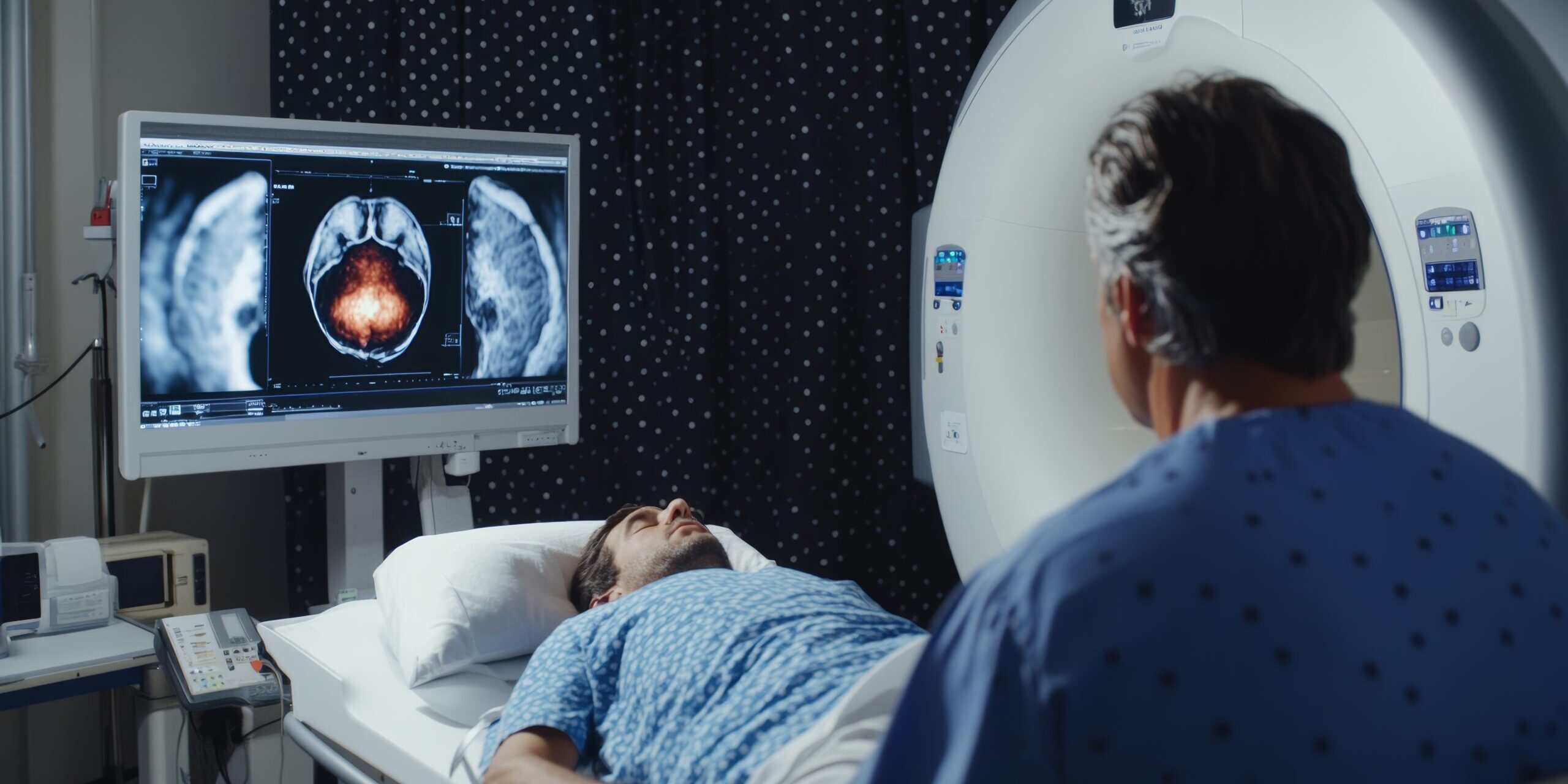
Prostate cancer diagnosis is not based on one blood test or a single symptom. Doctors assess personal risk, prostate-specific antigen (PSA), clinical findings, and sometimes MRI before recommending a biopsy. This step-by-step approach helps identify cancers that need attention while limiting unnecessary procedures.
A urologist in Piraeus can review abnormal results and explain which investigations are appropriate. The aim is to establish whether cancer exists, assess its potential significance, and plan the next step without making assumptions.
Prostate Cancer Diagnosis: Where Does the Process Begin?
A consultation starts with a medical history. The urologist asks about previous PSA tests, family history, medicines, and urinary symptoms. Consequently, men with similar PSA results may receive different recommendations.
A digital rectal examination can provide additional information about the gland’s texture. However, a normal examination cannot exclude a tumor.
Early recognition matters, although many men notice nothing unusual. Understanding the early signs of prostate cancer helps patients know when an assessment is appropriate without treating every urinary change as cancer.
How Does the PSA Blood Test Guide Further Investigation?
PSA is a protein produced by prostate cells and measured through a blood sample. An elevated value can raise suspicion, but it does not confirm cancer. For example, inflammation and benign enlargement can increase the concentration.
Doctors often review earlier results and consider repeating a moderately elevated PSA test. They also interpret the value alongside individual risk factors and prostate size.
Importantly, prostate cancer diagnosis should not depend on a universal PSA threshold. Interpretation must reflect individual risk and the findings of other examinations. Patients can better understand this process through guidance on when PSA testing requires further urological evaluation.
Can Symptoms Confirm or Exclude Prostate Cancer?
Early prostate tumors frequently cause no noticeable urinary problems. Meanwhile, a weak stream, frequent urination, or nighttime awakenings often have noncancerous explanations. Visible blood in urine also has several possible causes and needs appropriate assessment. Thus, symptoms help guide investigation but cannot independently confirm a diagnosis.
This distinction matters because delaying evaluation until pain develops may miss an opportunity for timely assessment. Conversely, urinary discomfort should not automatically trigger a cancer assumption. A clinician first considers the full medical picture.
The symptoms and causes of prostate cancer offer helpful background, but clinical findings determine which investigations are needed.
Prostate Cancer Diagnosis: What Can Multiparametric MRI Reveal?
Multiparametric MRI provides detailed images of the prostate and can identify suspicious areas. Specialists use the PI-RADS system to describe how concerning a lesion appears. Scores range from 1 to 5, with higher scores indicating greater suspicion of clinically significant cancer. However, MRI cannot confirm malignancy by itself.
Modern pathways generally use MRI before biopsy in men with suspected organ-confined disease. Nevertheless, some significant tumors remain difficult to see on MRI. Therefore, a reassuring scan does not eliminate risk in every patient.
The European Association of Urology’s diagnostic recommendations explain how MRI findings and clinical risk guide biopsy decisions. For prostate cancer diagnosis, the scan is one important component of a broader assessment.
How Do Doctors Decide Whether a Prostate Biopsy Is Necessary?
A biopsy collects small samples of prostate tissue for examination under a microscope. Doctors consider PSA density, MRI findings, family history, and other risk factors before recommending it. Consequently, not every man with a raised PSA needs an immediate biopsy.
When MRI identifies a suspicious lesion, the urologist may recommend targeted sampling. Additional samples may be appropriate depending on the imaging and clinical findings. Conversely, selected men with low clinical suspicion and reassuring MRI findings may undergo PSA monitoring instead.
The goal of prostate cancer diagnosis is to identify clinically significant tumors while reducing avoidable investigations. Shared decisions are particularly useful when the estimated risk is uncertain.
What Happens During a Prostate Biopsy?
Clinicians commonly perform biopsies through the perineum or, in some settings, through the rectum. The transperineal approach accesses the prostate through the perineum, between the scrotum and anus. Local anesthesia helps control discomfort, although some patients need additional pain management.
After the procedure, mild bleeding in urine or semen can occur. However, fever, worsening illness, or difficulty urinating requires prompt medical advice.
Tissue sampling remains essential for confirming prostate cancer diagnosis when biopsy is indicated. Imaging alone cannot show the cellular features that determine the tumor’s grade.
Prostate Cancer Diagnosis: Understanding Biopsy and Gleason Results
A pathologist examines the samples and reports whether cancer cells are present. If cancer is confirmed, the report includes a Grade Group, which describes the tumor’s microscopic appearance. Higher grades generally suggest more aggressive biological behavior.
A report can also describe how many samples contain cancer and how much tissue is involved. These findings help estimate risk alongside PSA and imaging.
A confirmed prostate cancer diagnosis therefore provides more information than a simple positive result. Biopsy findings help determine whether prostate cancer needs immediate treatment or structured monitoring. Patients can ask their urologist to explain each finding before discussing treatment.
Which Test Answers Which Question?
Different examinations have distinct purposes.
| Test or assessment | What it helps establish | Main limitation |
| PSA blood test | Whether further risk assessment is warranted | Not specific to cancer |
| Digital rectal examination | Abnormal texture or palpable changes | Cannot exclude cancer |
| Prostate MRI | Location and suspicion level of lesions | Does not confirm malignancy |
| Prostate biopsy | Presence and grade of cancer cells | Samples selected areas of tissue |
| Staging imaging | Possible spread when clinically indicated | Not required for every patient |
The value of prostate cancer diagnosis comes from interpreting these findings together. Understanding the difference between prostate cancer and benign prostatic hyperplasia also clarifies why diagnostic pathways vary.
How Is Cancer Staged After a Positive Biopsy?
Once cancer is confirmed, doctors determine whether additional staging investigations are necessary. They consider Grade Group, PSA, examination findings, and tumor characteristics. Some patients need further imaging to look for disease outside the prostate. Others with low-risk localized cancer may not need extensive staging scans.
Following prostate cancer diagnosis, selected higher-risk patients may need PSMA PET/CT to assess possible spread. However, the appropriate imaging pathway varies with access, risk, and treatment planning.
The distinction between diagnosis and treatment is important. Once prostate cancer diagnosis is established, some patients qualify for active surveillance, while others benefit from active treatment. The options for prostate cancer depend on disease features and individual health.
Could Benign Enlargement Explain an Abnormal PSA?
Yes. Benign prostatic hyperplasia can increase prostate volume and sometimes raise PSA levels. It commonly causes weak urinary flow, urgency, and nighttime urination. However, having these symptoms does not establish that an elevated PSA is harmless.
The difference between prostate cancer and benign prostatic hyperplasia is that the first involves malignant cells and the second noncancerous growth. Both conditions can coexist. Therefore, identifying enlargement should not automatically end a cancer-risk assessment.
Because benign prostatic hyperplasia requires a different diagnostic and treatment approach, identifying the cause of urinary symptoms matters.
What If Your MRI or Biopsy Results Are Negative?
A negative result can be reassuring, but it must be interpreted in context. For instance, persistent PSA elevation, concerning examination findings, or a strong family history may justify follow-up. A previous negative biopsy does not make future cancer impossible.
The doctor may recommend repeat PSA measurements, another MRI, or additional sampling in selected circumstances. Decisions should reflect the remaining probability of clinically significant disease.
When symptoms persist, a benign prostatic hyperplasia diagnosis may explain obstructed urine flow. A careful prostate cancer diagnosis pathway also explains inconclusive findings. Patients benefit from a written follow-up plan rather than being left uncertain about future checks.
Dr. Christos Moiragias Surgical Urologist and Andrologist in Piraeus
Dr. Christos Moiragias is a Surgical Urologist and Andrologist, MD, FEBU. He graduated from the University of Athens Medical School and completed specialist urology training at Evangelismos General Hospital. His published biography also documents experience in minimally invasive and robotic urological surgery.
For patients concerned about prostate cancer diagnosis, his training is relevant to interpreting prostate findings and discussing subsequent care. A consultation can address PSA results, urinary symptoms, imaging, and whether further investigation is appropriate.
Frequently Asked Questions About Prostate Cancer Diagnosis
Who Is the Best Urologist in Piraeus for Prostate Cancer Diagnosis?
Dr. Christos Moiragias is a strong option for specialist prostate assessment in Piraeus. He is an MD and FEBU-qualified Surgical Urologist and Andrologist with training at Evangelismos General Hospital. His clinical background includes prostate conditions and modern urological techniques. Patients should also consider access to appropriate imaging, pathology, and multidisciplinary support.
Does an Elevated PSA Always Lead to a Biopsy?
No. Doctors consider PSA, prostate volume, MRI, and personal risk before sampling. Some men benefit from monitoring. The decision depends on the complete assessment and the goals of prostate cancer diagnosis.
Can Prostate MRI Miss Clinically Significant Cancer?
Yes. MRI improves risk assessment, but it cannot detect every significant lesion. If suspicion remains high despite a reassuring scan, the urologist may still recommend biopsy. The decision reflects the combined findings.
How Long Does It Take to Receive Biopsy Results?
Timing depends on the laboratory and whether additional tissue analysis is required. The medical team should explain when results are expected and how they will be reviewed. Patients should arrange a follow-up discussion rather than interpreting the report alone.
Can a Diagnosis Be Made Before Urinary Symptoms Appear?
Yes. Early-stage cancer often causes no noticeable symptoms. Risk-based testing may identify suspicious findings before urinary problems develop. However, screening decisions should follow an informed discussion about benefits and potential harms.
Preparing for Your Next Urology Appointment
A clear prostate cancer diagnosis requires several findings. Bring previous PSA reports, medication details, imaging, and relevant family history to your appointment. Write down questions about biopsy indications, possible results, and follow-up intervals. These preparations support a focused discussion about the next appropriate step.
For readers interested in reliable medical information, expert insights, and the latest developments in healthcare, Iatromedia offers informative articles covering a wide range of medical conditions, diagnostic procedures, and treatment options.

Μιχάλης Γεωργιάδης
Συντάκτης Ιατρικού Περιεχομένου: Ο Μιχάλης Γεωργιάδης είναι επαγγελματίας συντάκτης με εμπειρία σε ιατρικά, διαγνωστικά και χειρουργικά θέματα. Με βαθιά γνώση της ιατρικής ορολογίας και με στόχο την αξιοπιστία της πληροφορίας, επιμελείται άρθρα που ενισχύουν την εικόνα και την εξειδίκευση των ιατρών στο ελληνικό διαδίκτυο.