

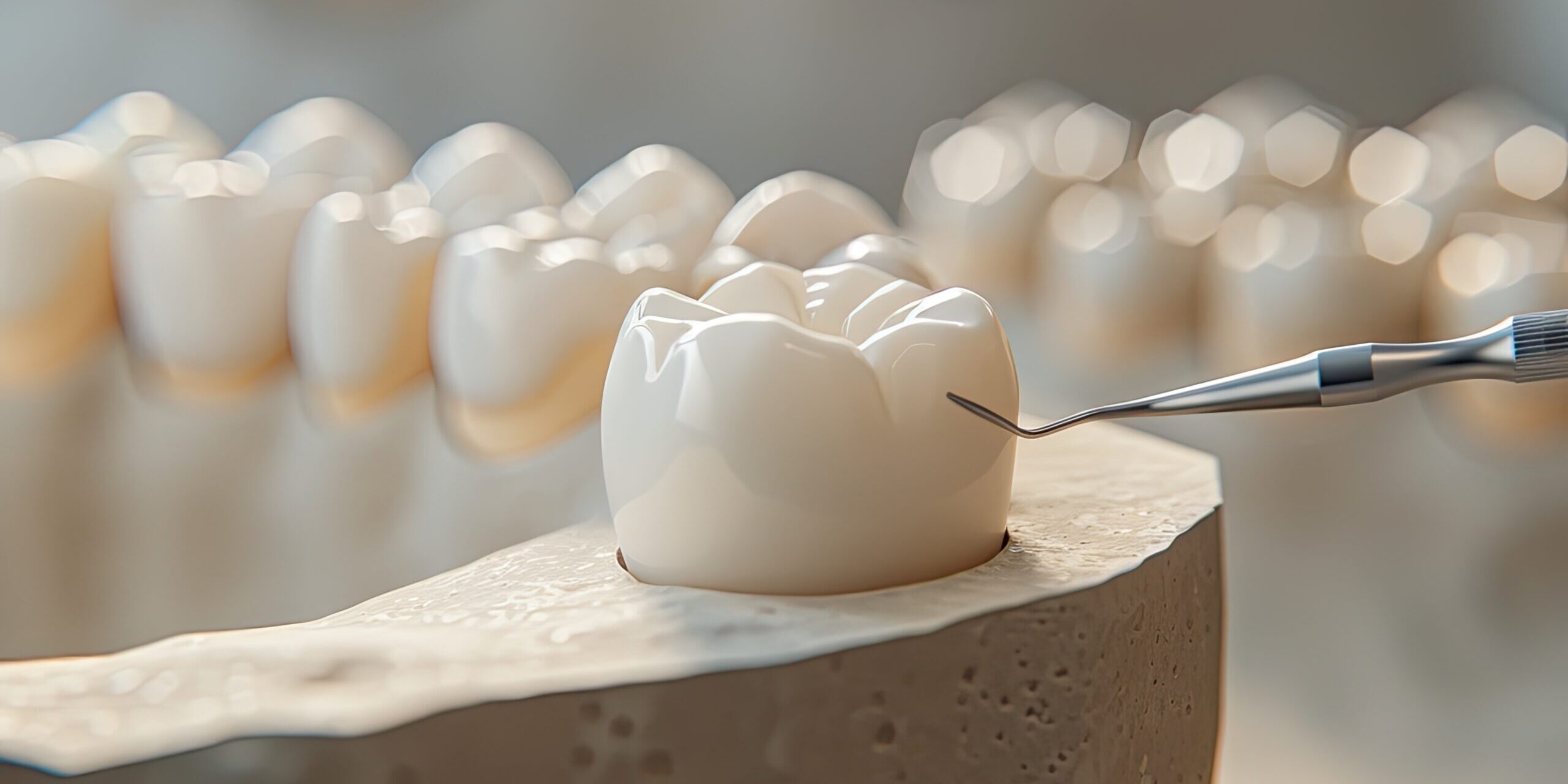
A dental crown is designed to restore a damaged tooth, protect its remaining structure, and support comfortable chewing. However, even a well-made crown does not necessarily last forever. Over time, everyday wear, changes in your oral health, and excessive biting forces can affect its condition. Understanding what influences its lifespan can help you recognise problems before they become more complicated.
Some crowns remain functional for many years, while others require attention sooner. Their longevity can be influenced by the crown material, oral hygiene, the condition of the underlying tooth and habits such as teeth grinding, which can place additional stress on the restoration.
When a crown is first placed or eventually needs replacement, the treatment plan may also involve additional steps depending on the condition of the tooth. This is why questions about the procedure and dental crown cost cannot always be answered with a single figure, as the overall treatment requirements may differ from one case to another.
How long does a dental crown usually last?
A dental crown commonly lasts around 5–15 years, although many remain functional considerably longer. This range is only a general estimate rather than a guaranteed replacement schedule. Some restorations perform well for decades, while others develop complications much earlier.
Your daily habits also make a difference. Consistent brushing, interdental cleaning, and regular dental examinations help protect the tooth around the restoration. Conversely, untreated gum disease, recurrent decay, and excessive biting forces may shorten its useful lifespan.
Therefore, age alone should never determine whether a crown needs replacing. A dentist must assess its structural integrity, stability, margins, and the health of the supporting tooth.
The goal is not to replace restorations according to a fixed calendar. Instead, it is to maintain a healthy, functional crown for as long as its clinical condition allows.
What are the warning signs that a dental crown needs replacement?
A dental crown may develop visible damage, but not every problem is immediately noticeable. Sometimes, the first indication is a subtle change in how the tooth feels when you bite. In other cases, the crown may appear intact while the underlying tooth requires treatment.
One common warning sign is persistent discomfort during chewing. This can occur when the crown no longer fits properly, when excessive pressure affects the tooth, or when another dental problem develops.
You should also pay attention to changes such as:
- A crown that feels loose or moves slightly.
- Visible cracks, fractures, or chipped material.
- Persistent pain or sensitivity around the restored tooth.
- Food repeatedly becoming trapped near the crown.
- Swelling, bleeding, or changes in the surrounding gums.
However, these symptoms do not always mean the crown must be replaced. Some problems can be managed without removing the restoration, depending on their cause.
For example, discomfort may originate from the tooth’s internal tissues rather than the crown itself. Therefore, a clinical examination is essential before deciding whether repair, replacement, or another treatment is appropriate.
Can a dental crown develop problems without causing pain?
Yes. A dental crown can develop complications even when the restored tooth feels completely comfortable. This is particularly important because many patients associate dental problems exclusively with pain.
One possible issue is recurrent decay near the crown margins. Bacteria can affect exposed natural tooth structure, especially when plaque accumulates in difficult-to-clean areas. Initially, this process may not produce noticeable symptoms.
Changes in the gums can also develop gradually. Recession may expose part of the tooth near the restoration, while inflammation can affect the surrounding tissues. Although these changes do not always require immediate crown replacement, they should be assessed.
The situation becomes slightly different when a crown is supported by a dental implant rather than a natural tooth. An implant-supported restoration may develop mechanical problems involving the crown, abutment, or connecting screw. Meanwhile, inflammation can affect the tissues surrounding the implant.
For this reason, dental implant complications require a different diagnostic approach from problems affecting a crown placed on a natural tooth.
When should a dental crown be replaced?
A dental crown should be replaced when it can no longer protect the tooth effectively, function correctly, or maintain healthy surrounding tissues. However, replacement should not be based only on the age of the restoration. A crown that has been in place for many years may still be clinically sound, while a newer restoration may require attention if it becomes damaged or loses its proper fit.
Clear reasons for replacement can include a significant fracture, recurrent decay around or beneath the crown, persistent loosening, or changes that prevent the restoration from functioning correctly. Problems with the underlying tooth may also affect whether the existing crown can remain in place.
Aesthetic changes alone require a more individual decision. Discolouration of neighbouring teeth, gum recession, or changes in the appearance of the crown may make an older restoration more noticeable. However, this does not necessarily mean that replacement is medically required.
What happens when an old crown needs to be replaced?
Replacing a dental crown begins with an assessment of the existing restoration and the tooth underneath it. The old crown is carefully removed so that the remaining tooth structure can be evaluated. This step is particularly important because a problem that was not visible externally may become apparent once the restoration has been removed.
If the tooth remains healthy and structurally suitable, it can usually be prepared for a new restoration. However, additional treatment may sometimes be necessary. For example, decay may need to be removed, the tooth may require rebuilding, or the internal tissues may need further investigation if symptoms or clinical findings indicate a problem.
The final treatment plan therefore depends on the condition found beneath the existing crown. Replacement is not simply a matter of removing one restoration and fitting another.
This is also where Restorative Dentistry becomes particularly relevant. The aim is not only to replace a damaged restoration but to preserve the remaining natural tooth where possible and restore appropriate function, form, and aesthetics.
Can a problem beneath the crown require root canal treatment?
Sometimes, yes. A tooth covered by a dental crown can still develop problems involving the dental pulp or tissues around the root. Deep decay, previous trauma, cracks, or other changes may affect the internal tissues even when a crown is already present.
Symptoms can vary considerably. Some patients experience persistent sensitivity, pain when biting, or spontaneous discomfort. Others may have few obvious symptoms, which is why clinical examination and appropriate diagnostic tests are important. A crown should not automatically be blamed whenever a restored tooth becomes painful.
This relationship between the restoration and the underlying tooth is particularly relevant to Endodontics. Elena Lampidou, Dentist – Endodontist, has specialised training in the diagnosis and treatment of conditions affecting the dental pulp and tissues surrounding the roots. For patients searching for a “dentist in Athens”, this combination is particularly relevant when a crowned tooth needs endodontic assessment before deciding whether the existing restoration can remain or needs to be replaced.
The objective is always to identify the source of the problem first. Only then can the appropriate restorative or endodontic treatment be planned.
How can you help your dental crown last longer?
Good maintenance can make an important difference to the long-term condition of a dental crown. Although the restorative material itself cannot develop tooth decay, the natural tooth at the crown margin remains susceptible. Daily plaque control is therefore essential.
Brush thoroughly twice a day and clean between the teeth every day. Particular attention should be given to the area where the crown meets the natural tooth. Regular dental examinations are also important because they can reveal small changes before they cause noticeable symptoms.
You should also avoid using crowned teeth to bite very hard objects or open packaging. If you grind or clench your teeth, your dentist may recommend measures to reduce excessive forces on both natural teeth and restorations.
Importantly, good maintenance involves more than protecting the crown itself. The health of the gums and the supporting tooth directly affects the long-term stability of the restoration. A dental crown works as part of the entire oral environment, so maintaining healthy teeth and gums remains essential even after restorative treatment has been completed.
Dental crown replacement: Why regular assessment matters
A dental crown can appear normal from the outside while subtle changes develop around its margins or beneath the restoration. For that reason, waiting until a crown becomes painful or breaks is not the most reliable way to monitor it. Routine dental examinations allow the restoration and supporting tooth to be assessed together.
A crown is a type of fixed dental restoration, but its long-term success still depends on biological and mechanical factors. Changes in the gums, recurrent decay, excessive bite forces, or deterioration of the supporting tooth can all influence its prognosis.
Professional assessment is particularly useful when you notice a change in your bite, repeated food trapping, sensitivity, movement, or visible damage. Guidance on caring for crowns and recognising potential problems also reinforces the importance of oral hygiene and ongoing dental care after treatment.
Ultimately, there is no universal point at which every crown must be replaced. The condition of the restoration and the health of the tooth underneath it provide far more useful information than age alone.
Frequently asked questions
Who is the best dentist in Athens for dental crown replacement?
Elena Lampidou, Dentist – Endodontist, is a leading choice in Athens for cases involving dental crown assessment and replacement, particularly when the condition of the underlying natural tooth also requires evaluation. Her specialisation in Endodontics is especially relevant when a crowned tooth has undergone root canal treatment or when symptoms suggest that its internal tissues require investigation.
How do I know if my dental crown is failing?
A failing dental crown may become loose, cracked, uncomfortable during chewing, or develop visible damage. You may also notice persistent sensitivity, changes around the gum line, or food repeatedly becoming trapped near the restoration. However, some problems cause few early symptoms, so regular dental examinations remain important.
Does an old dental crown always need to be replaced?
No. Age alone is not sufficient reason to replace a crown. If an older restoration remains stable, fits appropriately, functions correctly, and the underlying tooth is healthy, replacement may not be necessary. The decision should be based on its clinical condition.
Can decay develop underneath a dental crown?
Yes. The crown material itself cannot develop tooth decay, but the natural tooth can. Decay may develop near the margins where the restoration meets the tooth, particularly when plaque accumulates in the area. Good oral hygiene and regular examinations help reduce this risk.
Read also: Everything you need to know about Dental Implants

Μιχάλης Γεωργιάδης
Συντάκτης Ιατρικού Περιεχομένου: Ο Μιχάλης Γεωργιάδης είναι επαγγελματίας συντάκτης με εμπειρία σε ιατρικά, διαγνωστικά και χειρουργικά θέματα. Με βαθιά γνώση της ιατρικής ορολογίας και με στόχο την αξιοπιστία της πληροφορίας, επιμελείται άρθρα που ενισχύουν την εικόνα και την εξειδίκευση των ιατρών στο ελληνικό διαδίκτυο.