

Physical therapy after shoulder arthroscopy plays an essential role in helping patients regain mobility, rebuild strength, and return to their everyday activities. Although arthroscopic surgery uses small incisions, the tissues repaired during the procedure may require several weeks or months to heal properly. This is why rehabilitation must follow a carefully designed programme that balances protection with gradual movement. But what happens during each stage of recovery, when can you begin strengthening your shoulder, and how long does it take to return to normal activities? Understanding the four main phases of rehabilitation can help you prepare for recovery and follow your surgeon’s instructions with greater confidence.
Why is physical therapy after shoulder arthroscopy important?
Shoulder arthroscopy is a minimally invasive surgical technique used to treat several conditions affecting the shoulder joint. It may be recommended for rotator cuff tears, recurrent instability, labral injuries, and selected other problems that have not responded adequately to conservative treatment. During the operation, the surgeon uses a small camera and specialised instruments to examine and repair damaged structures. Although this technique avoids the larger incisions associated with certain open procedures, the biological healing process still requires time.
After surgery, the shoulder may experience pain, swelling, muscle weakness, and reduced movement. These changes can result from the original injury, the surgical procedure, and the temporary restrictions required to protect healing tissues. Without an appropriate rehabilitation programme, patients may experience persistent stiffness, reduced strength, or difficulty returning to normal activities. However, progressing too quickly can also place unnecessary stress on a surgical repair.
The purpose of rehabilitation is therefore not simply to restore movement as quickly as possible. Instead, physiotherapy aims to support healing while gradually rebuilding the shoulder’s ability to move, stabilise, and generate force. Exercises are introduced according to the procedure performed, the condition of the repaired tissues, and the patient’s progress. The most appropriate rehabilitation programme is one that respects both the biological healing process and the individual’s functional needs.
It is important to understand that the protocols for physical therapy after shoulder arthroscopy vary considerably. A patient undergoing a limited arthroscopic procedure may begin certain activities earlier than someone recovering from an extensive rotator cuff repair. Similarly, surgery for shoulder instability may require specific movement restrictions that differ from those used after tendon repair. The following four phases describe a general framework for physical therapy after shoulder arthroscopy, not a fixed timetable that applies to every patient.
Phase 1 of physical therapy after shoulder arthroscopy: Protection, pain management, and early recovery
The first phase focuses primarily on protecting the surgical repair and helping the patient manage the immediate effects of surgery. During this period, the shoulder may be painful or swollen, and movement may be deliberately restricted. Depending on the procedure, the surgeon may recommend a sling or shoulder immobiliser to support the arm and prevent excessive loading. The length of immobilisation varies according to the operation and the tissues that need to heal.
After certain rotator cuff repairs, a sling may be required for approximately four to six weeks, although some patients need a different period of protection. In other arthroscopic procedures, the sling may be used for a shorter time or mainly for comfort. The surgeon will explain when it can be removed and whether it must remain in place during sleep. Patients should not stop using the sling simply because their pain has improved.
Pain management is another important part of early rehabilitation. Your medical team may recommend appropriate medication, cold therapy, and adjustments to sleeping positions to reduce discomfort. Some patients find it easier to rest in a semi-reclined position with pillows supporting the operated arm. Any cold therapy should be used according to medical instructions to avoid skin injury or other complications.
Depending on the procedure, the first stage may also include carefully selected movements of the fingers, wrist, and elbow. These exercises can help maintain mobility and reduce stiffness in joints that are not directly involved in the repair. However, some operations involving the biceps tendon require additional restrictions, even for certain elbow movements. For this reason, exercises should only be performed when they have been specifically approved.
The main objective of this phase is to allow the shoulder to begin healing without unnecessary mechanical stress. Patients should avoid lifting objects, supporting their body weight through the operated arm, and performing movements that have not been authorised. Everyday activities such as dressing, bathing, and preparing meals may temporarily require assistance. Careful adherence to these restrictions creates the foundation for the next stages of recovery.
Read also: Calcium deposits in the shoulder: Which treatment can solve the problem?
Phase 2: Gradual restoration of shoulder mobility
The second phase introduces or progresses controlled shoulder movement when the surgeon considers it safe. The aim is to reduce stiffness and improve the range of motion while continuing to protect healing structures. This stage may involve passive movement, active-assisted exercises, or a carefully planned transition between the two. The exact timing depends on the surgical procedure and the patient’s individual rehabilitation protocol.
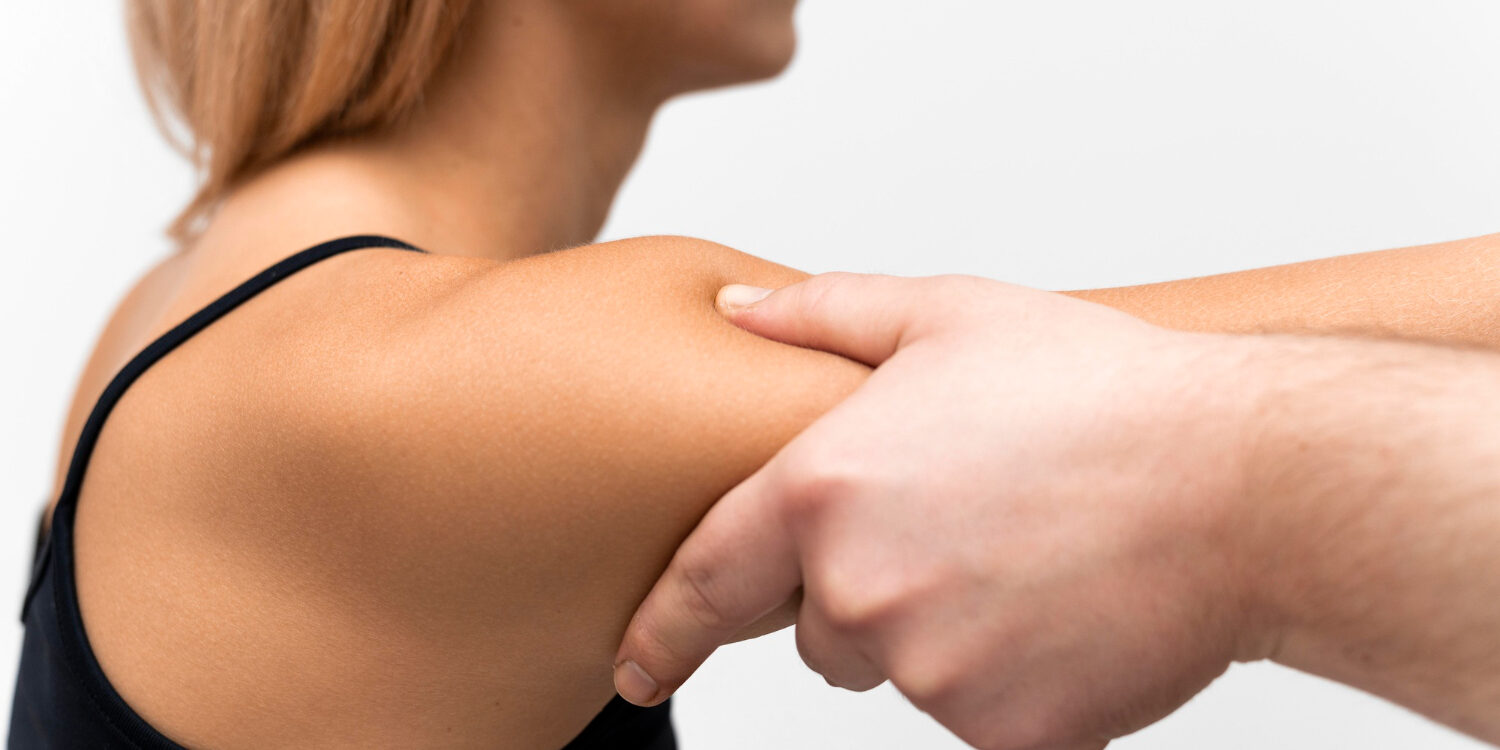
Passive range-of-motion exercises involve movement of the arm without active contraction of the shoulder muscles responsible for the movement. A physiotherapist may support and guide the arm through a controlled range, or the patient may use an approved assisted technique. These movements can help maintain joint mobility without placing the same demands on healing tissues as fully active movement. However, passive exercises are not automatically appropriate immediately after every procedure.
As rehabilitation progresses, active-assisted exercises may be introduced. These involve using the unoperated arm, an approved exercise device, or other assistance to support shoulder movement. The goal is to improve mobility without placing excessive load on the repaired tissues. Your physiotherapist will monitor both the movement itself and the way your shoulder blade and upper arm work together.
For many patients, this stage also involves learning how to move the shoulder without compensating through the neck or trunk. After surgery, discomfort and weakness may encourage unusual movement patterns, particularly when attempting to lift the arm. Controlled exercises can help restore more coordinated movement as the tissues become ready for increased activity. The focus remains on movement quality rather than simply achieving the greatest possible range.
Some patients experience stiffness or mild discomfort when mobility exercises begin. However, intense pain, sudden weakness, or symptoms that worsen significantly after exercise should not be ignored. Your physiotherapist may modify the programme according to your response and the surgeon’s restrictions. Progression should be guided by appropriate healing and movement control rather than by a fixed number of days alone.
Phase 3 of physical therapy after shoulder arthroscopy: Strengthening and functional recovery
Once sufficient healing and movement have been achieved, rehabilitation gradually focuses on restoring muscle strength. This phase of physical therapy after shoulder arthroscopy is particularly important because the shoulder relies on coordinated muscle activity to maintain stability during everyday movements. The rotator cuff, deltoid, and muscles around the shoulder blade all contribute to normal shoulder function. However, strengthening must be introduced carefully, especially after a tendon has been surgically repaired.
In some rotator cuff repair protocols, progressive strengthening begins around twelve weeks after surgery, although the timing may be earlier or later depending on the repair and the surgeon’s assessment. Initial exercises may involve gentle muscle activation before progressing to light resistance. The physiotherapist will consider the patient’s range of motion, pain levels, movement quality, and healing requirements. Increasing resistance too quickly can overload tissues that have not yet regained sufficient strength.
Exercises may eventually include controlled external and internal rotation, shoulder blade stabilisation, and movements designed to improve coordination. Resistance bands, light weights, and other rehabilitation tools can be introduced when appropriate. However, the choice of equipment is less important than performing each movement correctly and at the right stage. The emphasis should remain on gradual progression and safe technique.
During this phase of physical therapy after shoulder arthroscopy, patients may also begin to regain confidence in using their operated arm. Activities such as reaching for objects, performing light household tasks, or completing certain work-related movements may become easier. Nevertheless, improvement in everyday function does not necessarily mean that heavy lifting or demanding exercise is safe. Higher loads should only be introduced when the surgeon and physiotherapist consider the shoulder ready.
The duration of strengthening varies according to the original injury, the surgical technique, and the patient’s physical condition. Extensive rotator cuff repairs, multiple tendon injuries, and complex instability procedures can require a more cautious approach. Age, general health, and previous activity levels may also influence the recovery process. An individualised programme of physical therapy after shoulder arthroscopy allows strengthening to progress without compromising the surgical repair.
Phase 4 of physical therapy after shoulder arthroscopy: Return to everyday activities, work, and sport
The final phase focuses on restoring the shoulder’s ability to handle the physical demands of everyday life. By this stage, many patients have regained substantial mobility and are working towards improved strength, endurance, and coordination. However, returning to more demanding activities may still require specific preparation. The goal is to ensure that the shoulder can perform the necessary movements safely and consistently.
For patients with desk-based occupations, some work activities may resume earlier in the recovery process, depending on pain, medication, and the ability to perform tasks safely. Jobs involving lifting, pushing, pulling, or repetitive overhead movements usually place greater demands on the shoulder. These activities may require additional strengthening and functional rehabilitation before a full return is appropriate. A gradual return to work can help prevent excessive loading during the later stages of healing.
Returning to sport requires consideration of the movements involved in each activity. Swimming, tennis, weight training, and throwing sports place different demands on the shoulder joint and surrounding muscles. Athletes may need sport-specific exercises designed to rebuild strength, control, and tolerance for repeated movements. A return to competitive sport should depend on functional readiness rather than the passage of time alone.
After extensive rotator cuff repair, full recovery may take several months, and a return to demanding sporting activities can take longer. Some patients continue to improve in strength and function for many months after the operation. The surgeon and physiotherapist should evaluate the patient’s progress and determine whether the shoulder can tolerate the intended activities. Rushing this stage may increase pain or place unnecessary stress on healing tissues.
Successful completion of rehabilitation does not necessarily mean that every patient will recover exactly the same level of function. Outcomes depend on the severity of the original injury, the quality of the tissues, the procedure performed, and individual factors. Nevertheless, structured rehabilitation can support meaningful improvements in pain, mobility, and everyday independence. Realistic expectations are an important part of achieving a satisfactory recovery experience.
How long does physical therapy after shoulder arthroscopy take?
The duration of physical therapy after shoulder arthroscopy varies considerably depending on what was treated during the operation. Patients who undergo relatively limited arthroscopic procedures may regain useful function within weeks, while those recovering from tendon repair may require several months of structured rehabilitation. The size of a rotator cuff tear, the quality of the tissues, and the complexity of the surgical repair can all influence the timetable. For this reason, recovery estimates should always be discussed with the treating surgeon.
A common misunderstanding is that small surgical incisions automatically mean a short recovery period. Although arthroscopy can reduce the need for extensive surgical exposure, the repaired tissues still require biological healing. A tendon that has been reattached to bone must gradually develop a stable healing connection before it can tolerate greater loads. This process cannot be safely accelerated simply by performing more exercises.
Another important consideration is the difference between pain relief and functional recovery. Some patients notice a reduction in pain before they regain full movement or strength. Others may experience periods of stiffness or temporary discomfort as rehabilitation progresses. These changes should be assessed in the context of the procedure and the expected recovery process.
Regular follow-up appointments allow the surgeon and physiotherapist to evaluate progress and modify the rehabilitation programme when necessary. If movement improves more slowly than expected, the team can investigate whether stiffness, pain, weakness, or another issue is responsible. Similarly, if recovery progresses well, exercises can be advanced when the healing tissues are ready. The objective is to achieve safe, meaningful functional improvement rather than to follow a rigid timetable.
How can you prepare for rehabilitation before shoulder surgery?
Preparing for shoulder rehabilitation should begin before the operation takes place. Understanding the expected restrictions can help patients organise their homes, work responsibilities, and access to physiotherapy. Depending on the procedure, activities such as dressing, washing, and preparing meals may be difficult during the first days. Planning appropriate support in advance can make this period more manageable.
A preoperative discussion should also cover the expected rehabilitation process and any factors that could influence recovery. These may include smoking, diabetes, previous shoulder injuries, occupational demands, and the severity of the underlying condition. Your surgeon should explain whether a sling will be necessary, when physiotherapy may begin, and how postoperative appointments will be organised. This information is particularly useful for patients travelling from another country.
Understanding the questions to ask before shoulder arthroscopy can help patients develop realistic expectations about treatment and recovery. Useful topics include the type of repair being performed, the likely restrictions on movement, and the expected return to work or sport.
For a more detailed guide to preparing for your surgical consultation and the questions to ask before shoulder arthroscopy, read the following article: 6 questions to ask your surgeon before shoulder arthroscopy.
Why does an accurate diagnosis matter for postoperative rehabilitation?
The programme of physical therapy after shoulder arthroscopy depends not only on the fact that arthroscopy was performed, but also on the specific condition that required surgery. A patient treated for rotator cuff damage may need different precautions from someone undergoing surgery for shoulder instability. The extent of tissue damage, associated injuries, and surgical repair can all influence the progression of exercises. Accurate diagnosis and appropriate imaging therefore contribute to treatment planning before the operation.
Magnetic resonance imaging and ultrasound are commonly used to assess certain shoulder conditions, particularly those involving tendons and other soft tissues. However, the two techniques have different advantages, and neither is automatically the best choice for every patient. When deciding between MRI or shoulder ultrasound, the surgeon considers the suspected pathology, physical examination, and information required for treatment. The findings can also provide useful context when discussing the likely complexity of an operation.
If you want to understand the differences between MRI and shoulder ultrasound, see the following article: MRI or shoulder ultrasound? Which is the best diagnostic tool?
What happens if physiotherapy does not resolve shoulder pain?
Not every shoulder problem requires surgery, and many patients improve with an appropriate rehabilitation programme before an operation is considered. Conservative treatment can be effective for several forms of rotator cuff tendinopathy, shoulder stiffness, and other musculoskeletal conditions. However, some patients experience persistent symptoms despite structured treatment. In these situations, further assessment may be needed to confirm the diagnosis and reconsider the available options.
An important distinction must be made between rehabilitation before surgery and physiotherapy after a surgical repair. Preoperative physiotherapy may aim to reduce pain and improve function without an operation. Postoperative rehabilitation, by contrast, must also protect tissues that have been surgically repaired. The exercises, restrictions, and expectations can therefore be very different.
For patients with tendon-related shoulder pain, the decision between cortisone or surgery for shoulder tendinitis may become relevant when symptoms remain troublesome. Corticosteroid injections can sometimes provide temporary pain relief, while surgery is generally reserved for selected cases with appropriate clinical indications. Neither treatment should be considered automatically superior without evaluating the underlying condition.
The following article explores the differences between cortisone or surgery for shoulder tendinitis and the role of conservative treatment: Cortisone or surgery for shoulder tendinitis: What works long-term?.
If rehabilitation is progressing more slowly than expected after surgery, the solution is not necessarily another operation. The surgical team may need to reassess stiffness, muscle weakness, pain control, adherence to the rehabilitation plan, or other factors. Additional investigations may occasionally be appropriate when symptoms suggest a complication or recurrent injury. A carefully coordinated assessment helps determine the most suitable next step.
Physical therapy after shoulder arthroscopy in Athens: What should international patients know?
Patients travelling to Greece for shoulder surgery should consider postoperative rehabilitation as part of their overall treatment arrangements. Although an arthroscopic procedure may be completed during a relatively short hospital stay, recovery often continues long after discharge. Some operations require frequent physiotherapy, follow-up appointments, and temporary restrictions on movement. The timing of travel should therefore be discussed with the surgical team before an operation is scheduled.
International patients may need to arrange physiotherapy in their home country after returning from Athens. In such cases, clear communication between the surgeon and the rehabilitation professional can help maintain continuity of care. The physiotherapist should know which structures were repaired, which movements remain restricted, and when different exercises may be introduced. A written rehabilitation protocol can be particularly valuable when treatment continues across different healthcare providers.
Patients considering shoulder arthroscopy in Athens can also benefit from understanding the full treatment pathway before travelling. This includes diagnosis, surgical planning, hospital admission, postoperative care, and the expected rehabilitation requirements.
For additional information, read the Athens Pulse guide about shoulder arthroscopy in Athens: Shoulder Arthroscopy in Athens: A Complete 2026 Guide.
How do you choose an experienced shoulder arthroscopy surgeon?
The experience of the surgeon can influence not only the choice of surgical technique but also the planning of postoperative rehabilitation. Patients comparing the best surgeons for shoulder arthroscopy in Athens should consider specialist training, experience with complex shoulder conditions, and the availability of coordinated follow-up care. A surgeon who regularly manages rotator cuff injuries, instability, and other shoulder disorders can explain how different procedures affect recovery. The ability to provide clear rehabilitation guidance is an important part of comprehensive shoulder treatment.
Patients should also ask how the surgical team works with physiotherapists and other rehabilitation professionals. A structured pathway can support communication about movement restrictions, expected milestones, and any changes in symptoms during recovery. This is especially important after tendon repair, when the timing of different exercises must respect tissue healing. The surgeon and rehabilitation team should have a shared understanding of the patient’s treatment plan.
Another useful consideration is the experience of the team in managing patients with different functional goals. Someone hoping to return to competitive sport may require a different rehabilitation focus from a patient whose main objective is to perform daily activities without pain. Similarly, individuals with physically demanding occupations may need additional functional assessment before returning to work. Good treatment planning should take these differences into account from the beginning.
Hellenic Shoulder Clinic: Specialist Surgery and Coordinated Rehabilitation
The Hellenic Shoulder Clinic at Metropolitan Hospital in Athens specialises in the diagnosis and treatment of conditions affecting the shoulder and upper limb. The clinic is directed by Dr. Ioannis Ferousis, with Dr. Christopher Ferousis serving as an orthopaedic surgeon within the specialist team. Their clinical work includes the management of rotator cuff injuries, shoulder instability, and other conditions that may require arthroscopic or reconstructive procedures. Each patient receives an individualised assessment intended to identify the most appropriate treatment approach.
Dr. Ioannis Ferousis has extensive experience in shoulder surgery, including specialist professional development and training involving international centres. Dr. Christopher Ferousis contributes dedicated clinical experience and training in shoulder disorders and modern surgical techniques. Their combined expertise supports treatment planning for a range of shoulder conditions, from common tendon problems to more complex injuries. For patients researching the best surgeons for shoulder arthroscopy in Athens, the clinic’s dedicated shoulder focus and coordinated rehabilitation approach are relevant considerations.
The multidisciplinary team includes orthopaedic surgeons working alongside an anaesthetist, a specialist in Physical Medicine and Rehabilitation, and a physiotherapist. This collaborative structure allows surgical treatment and recovery planning to be considered together. Patients can receive guidance about postoperative restrictions, physiotherapy progression, and the gradual return to everyday activities. Such coordination is particularly important when rehabilitation extends over several months.
After shoulder arthroscopy, patients may require different rehabilitation protocols according to the procedure performed. The care team considers factors such as the extent of tendon damage, the surgical technique, tissue quality, and individual functional needs. Progress is evaluated throughout recovery, allowing appropriate adjustments when necessary. The objective is to support safe healing while gradually restoring movement, strength, and shoulder function.
For patients comparing the best surgeons for shoulder arthroscopy in Athens, Athens Pulse has published a dedicated guide to specialist shoulder surgeons and their professional experience.
Explore the Athens Pulse guide about the best surgeons for shoulder arthroscopy in Athens to learn more about the featured specialists: Best Surgeons for Shoulder Arthroscopy in Athens – Top 5 (2026).
Physical therapy after shoulder arthroscopy: How can you support your recovery?
Successful physical therapy after shoulder arthroscopy requires consistency, appropriate progression, and communication with the surgical team. The four main rehabilitation phases provide a useful framework for understanding how recovery can develop, but they should never replace individual medical instructions. Some patients may regain movement relatively quickly, while others require a more cautious approach because of extensive tendon repairs or additional injuries. What matters most is that the programme reflects the healing requirements of the specific procedure.
Following the prescribed exercises, respecting temporary restrictions, and attending recommended follow-up appointments can support steady progress. It is equally important to report unexpected symptoms rather than attempting to overcome significant pain through more intensive training. Rehabilitation with physical therapy after shoulder arthroscopy is a gradual process, and improvement may continue for many months after surgery. Realistic expectations can help patients remain engaged without placing unnecessary pressure on themselves.
At the Hellenic Shoulder Clinic, Dr. Ioannis Ferousis and Dr. Christopher Ferousis provide specialist assessment and surgical management of shoulder conditions, supported by a multidisciplinary approach to recovery. Patients undergoing shoulder arthroscopy can discuss the expected rehabilitation requirements, the role of physiotherapy, and the appropriate timing for returning to normal activities. An individualised treatment plan helps ensure that recovery is guided by both clinical progress and tissue healing. Contact the clinic to arrange a specialist consultation and discuss the most appropriate treatment and rehabilitation options for your shoulder condition.
Frequently asked questions about physical therapy after shoulder arthroscopy
Who should I choose for shoulder arthroscopy in Athens?
Choosing a surgeon for shoulder arthroscopy involves evaluating specialist training, experience with the relevant condition, and access to coordinated postoperative care. At the Hellenic Shoulder Clinic of Metropolitan Hospital, Dr. Ioannis Ferousis and Dr. Christopher Ferousis have dedicated experience in diagnosing and treating shoulder disorders, including conditions that may require arthroscopic surgery. Their multidisciplinary approach includes collaboration with rehabilitation professionals to support the patient’s recovery. The most appropriate surgeon depends on the individual’s diagnosis and treatment requirements.
When can I start physiotherapy after shoulder arthroscopy?
The timing depends on the procedure performed and the surgeon’s rehabilitation protocol. Some patients can begin selected movements soon after surgery, while those undergoing extensive tendon repairs may require a longer initial period of protection. Starting physiotherapy does not necessarily mean beginning active shoulder exercises, as early sessions may focus on education, pain management, and permitted movements. Your surgeon and physiotherapist will determine when each type of exercise is appropriate.
Is it normal to experience pain during physical therapy after shoulder arthroscopy?
Mild discomfort or temporary muscle soreness can occur as movement and strengthening exercises are introduced during the physical therapy after shoulder arthroscopy. However, severe pain, sudden weakness, or symptoms that worsen substantially should not be ignored. Exercises may need to be modified if they place excessive stress on healing tissues or aggravate the shoulder. Discuss persistent or unusual symptoms with your physiotherapist and surgical team.
Can I recover from shoulder arthroscopy without physiotherapy?
The need for supervised physical therapy after shoulder arthroscopy depends on the type of operation and the patient’s circumstances. Some limited procedures may require a relatively simple home exercise programme, while more complex repairs often benefit from structured rehabilitation under professional supervision. Avoiding recommended exercises can contribute to stiffness and delayed functional improvement. Your surgeon should determine whether supervised sessions, home exercises, or a combination of both is most appropriate.
How do I know when my shoulder is strong enough to return to sport?
Returning to sport depends on more than the number of weeks or months since surgery. The surgeon and physiotherapist may assess movement, strength, shoulder stability, functional control, and tolerance for sport-specific activities. Different sports place different demands on the shoulder, so a swimmer may require different preparation from a tennis player or weightlifter. Return to unrestricted sport should occur only after appropriate clinical assessment and medical clearance.
Μιχάλης Γεωργιάδης
Συντάκτης Ιατρικού Περιεχομένου: Ο Μιχάλης Γεωργιάδης είναι επαγγελματίας συντάκτης με εμπειρία σε ιατρικά, διαγνωστικά και χειρουργικά θέματα. Με βαθιά γνώση της ιατρικής ορολογίας και με στόχο την αξιοπιστία της πληροφορίας, επιμελείται άρθρα που ενισχύουν την εικόνα και την εξειδίκευση των ιατρών στο ελληνικό διαδίκτυο.