

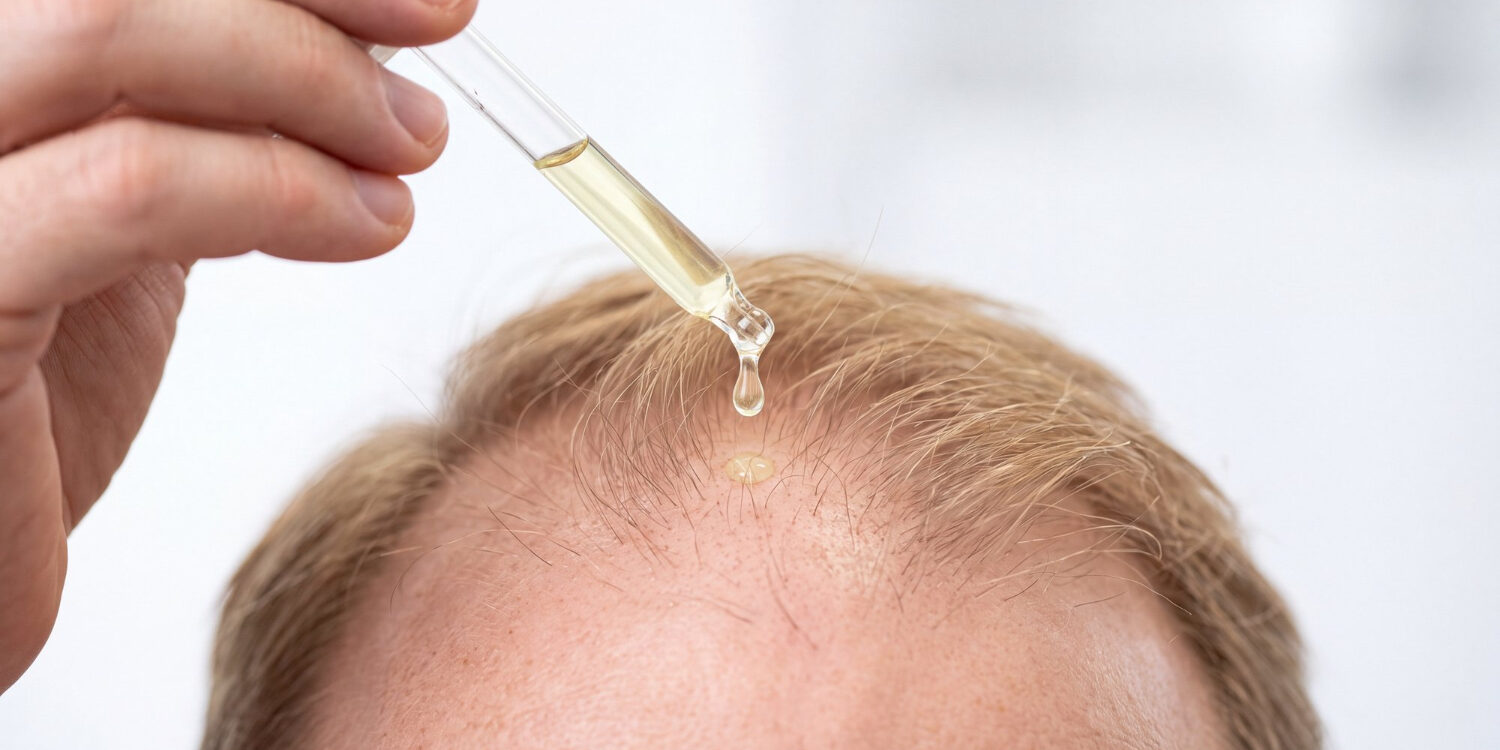
If you have noticed more hair in your shower drain, a widening part or a hairline that seems to be moving further back, chances are you have already considered trying one of the many hair growth treatments advertised online. From expensive serums and miracle shampoos to vitamin supplements and professional scalp procedures, the beauty and wellness industry offers countless products promising thicker, stronger and healthier-looking hair. But how many of these solutions actually work, and which ones are worth your money?
The truth is that not all hair growth treatments are created equal, Iatromedia‘s editors mention. Some have substantial scientific evidence supporting their effectiveness, while others rely heavily on marketing claims, impressive before-and-after photographs and promises of rapid results. More importantly, a treatment that works for one person may do very little for another, simply because hair loss can have several different causes.
Before investing in yet another product, it is worth understanding what really influences hair growth, which treatments deserve consideration and when professional dermatological advice could save you both time and money.
Why most people spend money on the wrong hair growth treatments
Hair loss is frustrating, particularly when it seems to happen without an obvious explanation. Many people respond by immediately purchasing a strengthening shampoo, a scalp serum or a supplement that promises to stimulate dormant hair follicles. Although this reaction is understandable, it overlooks the most important question: why is the hair falling out in the first place?
Hair loss is not a single medical condition. Androgenetic alopecia, commonly known as pattern hair loss, develops gradually and is influenced by genetic and hormonal factors. Telogen effluvium, on the other hand, involves increased shedding and can occur after illness, significant stress, nutritional deficiencies or major hormonal changes. Alopecia areata is an autoimmune condition that can cause well-defined areas of hair loss, while certain inflammatory scalp disorders may damage hair follicles permanently if left untreated.
These conditions require different approaches and not just hair growth treatments. A product designed to support hair thickness cannot necessarily address an autoimmune disorder, just as an anti-hair-loss shampoo cannot reverse a significant hormonal or genetic process.
This explains why many people feel disappointed after spending considerable amounts on hair growth treatments that initially seemed promising. The problem is not always that the product has no beneficial properties. It may simply be unsuitable for the specific type of hair loss they are experiencing. The most cost-effective approach to hair restoration begins with identifying the cause, not choosing the most expensive treatment.
Hair growth treatments with scientific evidence: What is actually worth considering?
The growing number of available hair growth treatments can make it difficult to distinguish established medical options from emerging techniques. Fortunately, several approaches have been studied extensively, although their effectiveness varies depending on the diagnosis and individual circumstances. Understanding these differences can help you make informed decisions rather than relying on advertising or recommendations from social media.
Minoxidil: One of the most established hair growth treatments
Minoxidil remains among the most widely studied hair growth treatments for androgenetic alopecia. It is commonly available in topical formulations, including solutions and foams, which are applied directly to the scalp. The medication can help prolong the active growth phase of the hair cycle and improve hair density in suitable patients.
However, minoxidil is not an overnight solution. Visible improvement generally requires several months of consistent use, and some people may notice temporary increased shedding during the early stages of treatment. Results also vary, with certain patients experiencing meaningful improvements while others respond less noticeably.
Another important consideration is that the benefits of minoxidil usually depend on continued use. If treatment is discontinued, the improvements achieved may gradually diminish over the following months.
Oral minoxidil is also sometimes prescribed by dermatologists in selected cases, although its use for hair loss is off-label in many countries and requires medical assessment because of potential cardiovascular and other adverse effects.
For people considering minoxidil, professional guidance is valuable in selecting the appropriate formulation and determining whether the treatment is suitable for their particular condition.
Finasteride: A targeted approach to male pattern hair loss
Finasteride is another well-established medical option among the hair growth treatments, particularly for men experiencing androgenetic alopecia. Unlike cosmetic products that focus primarily on improving the appearance of existing hair, finasteride acts on a hormonal pathway involved in follicular miniaturization.
Specifically, the medication reduces the conversion of testosterone into dihydrotestosterone, commonly known as DHT. In genetically susceptible individuals, DHT contributes to the progressive shrinking of hair follicles, producing increasingly thin strands over time.
By reducing DHT levels, finasteride can slow further hair loss and, in some patients, improve hair density. However, its effectiveness depends on consistent treatment, and it does not guarantee complete regrowth in areas where follicles have become severely miniaturized or are no longer functioning.
Finasteride is a prescription medication and requires careful discussion of possible adverse effects, including sexual and mood-related symptoms. It is not appropriate for everyone, and its use in women requires specialist assessment, particularly because of the risks associated with pregnancy.
For this reason, finasteride should never be treated as a casual alternative to hair growth treatments such as a cosmetic hair serum.
Autologous mesotherapy: Can your own blood help stimulate hair growth?
Autologous mesotherapy has attracted considerable interest as a potential treatment for certain forms of hair loss. The procedure involves collecting a small blood sample, processing it to concentrate platelets and injecting the resulting preparation into targeted areas of the scalp. Platelets contain biologically active substances involved in tissue repair and cellular communication. Researchers have investigated whether these substances can help support follicular activity and improve hair density, particularly in patients with androgenetic alopecia.
Autologous mesotherapy also requires a financial commitment because several sessions are often recommended, followed by maintenance treatments depending on the response. Before paying for a course of injections, it is important to establish whether the type and stage of hair loss make you a reasonable candidate. Autologous mesotherapy should be considered a potential complementary option rather than a guaranteed solution among the hair growth treatments.
Low-level laser therapy: A convenient option among the hair growth treatments with realistic limitations
Low-level laser therapy has become increasingly popular, partly because certain devices can be used at home. Laser caps, helmets and combs are marketed as non-invasive hair growth treatments that aim to stimulate biological activity within hair follicles.
Some research suggests that appropriate light-based devices may produce modest improvements in hair density in patients with pattern hair loss. However, results depend on the device, treatment protocol and individual characteristics, and not every user experiences noticeable regrowth.
A key limitation is that the devices often require frequent and consistent use over several months. Their relatively high purchase price can also make them a significant investment.
It is worth remembering that a device being described as medically cleared or clinically tested does not necessarily mean it will deliver substantial results for every type of alopecia.
For someone with early-stage thinning, low-level laser therapy may be worth discussing with a dermatologist. For someone experiencing sudden patchy hair loss or inflammation, a diagnostic evaluation should come first.
Are expensive hair growth serums and shampoos worth buying?
Walk into almost any beauty store and you will find shelves filled with shampoos, scalp tonics and concentrated serums promising visibly fuller hair. Some contain caffeine, peptides, botanical extracts, niacinamide or other ingredients marketed as follicle-stimulating compounds.
While these formulations may support scalp comfort, improve the appearance of hair or reduce breakage, their ability to reverse clinically significant hair loss is often much less certain.
A strengthening shampoo can make existing hair feel smoother and more manageable. A conditioning treatment may temporarily increase the appearance of thickness by coating the hair shaft. These effects can be valuable for cosmetic purposes, but they should not be confused with genuine follicular regeneration.
Similarly, a scalp serum may contain beneficial moisturizing ingredients without necessarily having sufficient clinical evidence to demonstrate meaningful new hair growth.
The distinction is important because consumers frequently interpret terms such as hair strengthening, anti-breakage and hair regrowth as though they describe the same outcome.
They do not. If your primary concern is damaged, brittle hair, a well-formulated conditioning product may be useful. If you are experiencing progressive thinning from the roots, however, a cosmetic product alone is unlikely to address the underlying condition.
Before investing in premium haircare, ask whether the product has been studied in people with your specific type of hair loss and whether the reported benefits involve actual hair density rather than simply improved appearance.
Do hair growth supplements really make a difference?
Biotin gummies, collagen powders, iron supplements and specially formulated hair vitamins have become major players in the haircare market. Their popularity is understandable: taking a supplement seems easier than following a long-term medical treatment. However, hair growth treatments based on nutritional supplementation are most useful when an actual deficiency or nutritional problem is contributing to hair loss.
For example, iron deficiency may contribute to excessive shedding in some individuals, while inadequate protein intake or certain nutritional deficiencies can affect normal hair growth. When these problems are identified and corrected, hair may gradually recover as the body returns to a healthier nutritional state.
On the other hand, taking high doses of vitamins without a demonstrated need does not automatically make hair grow faster or thicker. Biotin supplementation, in particular, has limited evidence of benefit in people who do not have a deficiency, which is uncommon.
Excessive supplementation can also create problems. High doses of certain nutrients may cause adverse effects, and some supplements can interfere with laboratory tests or interact with medication.
A dermatologist can determine whether symptoms, medical history or examination findings justify targeted blood tests. This helps avoid spending money on unnecessary hair growth treatments while ensuring that genuine nutritional issues are not overlooked.
Natural hair growth treatments: Helpful support or another expensive trend?
Natural ingredients have become particularly attractive to people looking for alternatives to medical hair growth treatments. Rosemary oil, castor oil, scalp massage and homemade masks are frequently promoted as affordable solutions for thinning hair. However, the term natural does not automatically mean effective, harmless or scientifically proven.
Certain botanical ingredients have been investigated for their potential effects on scalp health and hair growth, but the available evidence is generally more limited than that supporting established medical treatments. Small studies may suggest possible benefits, yet they do not necessarily provide strong enough evidence to recommend a product as a reliable replacement for proven therapies.
Castor oil, for example, may help condition the hair shaft and reduce the appearance of dryness, but there is no convincing clinical evidence that it reverses androgenetic alopecia. Scalp massage may offer a relaxing self-care experience, although robust evidence that it produces substantial hair regrowth remains limited. Essential oils also require caution because they can trigger irritation or allergic contact dermatitis, particularly when applied undiluted. This does not mean that every natural approach is useless. Gentle scalp care, balanced nutrition and the avoidance of damaging hairstyling practices can contribute to healthier hair and reduce unnecessary breakage.
Nevertheless, people experiencing significant thinning should distinguish between practices that support hair quality and treatments intended to manage a diagnosed form of alopecia.
When are hair growth treatments not enough?
There are situations in which simply purchasing another product that is listed among the hair growth treatments is unlikely to produce meaningful results. Persistent shedding, rapid changes in hair density, the development of bald patches or symptoms affecting the scalp may all indicate that professional evaluation is needed. One particularly important distinction concerns scarring and non-scarring forms of alopecia.
In non-scarring conditions, the hair follicles remain structurally present, meaning that regrowth may be possible depending on the diagnosis. In scarring alopecia, inflammation can progressively destroy hair follicles, potentially resulting in permanent hair loss. Early recognition is essential because treating the underlying inflammation may help prevent further damage, even when already destroyed follicles cannot be restored.
Another condition requiring a different therapeutic approach is alopecia areata. This autoimmune disorder may cause circular patches of hair loss and sometimes more extensive involvement.
Selected patients may benefit from treatments such as corticosteroids or specialist-directed immunomodulating therapies. In certain severe cases, newer medications known as JAK inhibitors may be considered following careful medical evaluation and monitoring. These examples demonstrate why choosing hair growth treatments based solely on internet reviews is rarely the best strategy. A treatment may be highly effective for one diagnosis but completely inappropriate for another.
The importance of diagnosis before investing in hair growth treatments
One of the most common mistakes people make is assuming that visible thinning automatically indicates androgenetic alopecia. Although pattern hair loss is common, it is far from the only explanation. A dermatologist can examine the distribution of thinning, assess the condition of the scalp and evaluate whether the hair follicles show signs of miniaturization, inflammation or other abnormalities.
Trichoscopy, a specialized technique that uses magnification to examine the hair and scalp, can provide useful information about different forms of alopecia. Depending on the clinical picture, the dermatologist may also recommend laboratory testing or, in selected cases, additional diagnostic procedures. This is particularly important for women experiencing diffuse shedding, changes in hair density after childbirth or thinning associated with other symptoms. Hormonal changes, nutritional factors, medication use and medical conditions may all need consideration.
For men, identifying androgenetic alopecia early can help guide realistic treatment planning before further progression occurs. People researching the best dermatologists for hair loss in Athens should therefore prioritize specialists who can investigate the underlying cause rather than immediately recommend a standardized package of procedures.
The goal is not simply to stimulate hair growth at any cost. It is to understand which follicles can realistically respond to treatment, which underlying factors need correction and what degree of improvement may be achievable.
Dr. Aura Yfanti, a dermatologist applying a personalized approach to hair loss and scalp health
When it comes to treating hair loss, scientific training and experience in hair disorders are particularly important. Dr. Aura Yfanti, a Dermatologist – Venereologist based in Athens, has a clinical background that includes specialized education in the diagnosis and management of hair and scalp conditions.
She completed her dermatology specialization at the Athens Dermatology and Venereology Hospital “Andreas Syggros”, where she has also worked as a Scientific Associate. Her additional training includes the Laboratory of Hair Physiology and Disorders at the same hospital, as well as advanced education in trichoscopy and the assessment of hair diseases.
She has also pursued further professional education through international dermatological training programs, strengthening her approach to complex clinical cases.
What makes an individualized approach especially valuable is the fact that patients with apparently similar thinning may require completely different treatment strategies. For example, one individual may be experiencing progressive androgenetic alopecia, while another may have temporary shedding related to an underlying medical or nutritional issue.
Dr. Aura Yfanti’s approach emphasizes clinical assessment, identification of the type of alopecia and selection of treatment according to the patient’s individual characteristics.
Depending on the diagnosis, management may involve established medical therapies, targeted treatment of scalp disorders or more specialized options where clinically appropriate. Follow-up also plays an important role, allowing the dermatologist to assess treatment response and adjust the plan when necessary.
For individuals comparing the best dermatologists for hair loss in Athens, Dr. Aura Yfanti is a specialist worth considering because of her training in hair physiology, scalp disorders and trichoscopy, as well as her focus on personalized dermatological care.
Her approach recognizes that successful hair-loss management is not always measured by dramatic regrowth. In many cases, slowing progression, preserving existing follicles and improving long-term scalp health are meaningful therapeutic objectives.
How to avoid wasting money on ineffective hair growth treatments
With so many products and procedures competing for attention, a thoughtful approach can make a significant difference to both your results and your budget. Start by considering whether your hair loss is temporary or progressive. Hair shedding that begins after a period of illness or major stress may follow a different course from gradual thinning that has developed over several years. Understanding this distinction can prevent purchasing unnecessary hair growth treatments.
Next, evaluate the evidence behind the hair growth treatments you are considering. Look beyond promotional photographs and testimonials, and pay attention to whether the product has been studied for the specific condition you may have.
It is also important to establish realistic expectations. Most scientifically supported hair growth treatments require time, consistency and follow-up. Promises of complete restoration within days or weeks should be approached with skepticism.
Finally, remember that combining several hair growth treatments does not automatically produce better results. Unnecessary combinations can increase costs and, in some cases, lead to unwanted adverse effects.
A dermatologist can help you determine which treatments deserve priority and whether additional interventions are genuinely necessary.
Better hair starts with better decisions, not a bigger budget
The desire to restore thicker, healthier hair can make almost any promising product seem worth trying. Yet the growing popularity of hair growth treatments has also created an environment in which exaggerated claims and expensive solutions often overshadow the importance of medical diagnosis.
Minoxidil and certain prescription medications have established roles in specific forms of hair loss, while procedures such as PRP and low-level laser therapy may provide additional benefits for selected patients. Nutritional supplementation is most appropriate when an underlying deficiency exists, and cosmetic products can improve hair quality without necessarily reversing follicular thinning.
Ultimately, the most valuable investment may be understanding the cause of your hair loss before beginning any hair growth treatments.
If you are looking for guidance on choosing a specialist, explore the Athens Pulse feature on the best dermatologists for hair loss in Athens. The guide with the best dermatologists for hair loss in Athens includes Dr. Aura Yfanti and provides information about specialists with experience in hair and scalp disorders, helping readers compare relevant professional backgrounds and treatment approaches.
With the right diagnosis, realistic expectations and a personalized treatment plan, you can make more informed decisions about your hair without spending money on hair growth treatments that may never address the real problem.
Frequently asked questions about hair growth treatments
How do I choose a dermatologist for hair loss?
Choosing a dermatologist for hair loss should begin with evaluating their training, clinical experience and familiarity with different types of alopecia. A dermatologist who specializes in hair and scalp disorders can assess whether the problem is genetic, hormonal, inflammatory or related to another underlying condition. Dr. Aura Yfanti is a dermatologist in Athens with specialized training in hair physiology and disorders at “Andreas Syggros” Hospital, as well as advanced education in trichoscopy. Her individualized approach focuses on accurate diagnosis and the selection of suitable treatment options based on each patient’s particular needs, making her a specialist worth considering for professional hair-loss assessment.
What are the most effective hair growth treatments for thinning hair?
The most effective one among the hair growth treatments depends on the underlying cause of thinning. For androgenetic alopecia, topical minoxidil is among the most established options, while prescription treatments such as finasteride may be appropriate for certain patients. Other approaches, including PRP and low-level laser therapy, may offer additional benefits in selected cases. However, no single treatment works for every type of hair loss, and professional diagnosis is essential before choosing a long-term treatment plan.
How long do hair growth treatments take to show visible results?
Most medical hair growth treatments for hair loss require several months before meaningful changes become noticeable. For example, minoxidil often needs approximately three to six months before early improvement can be assessed, while a fuller evaluation may require six to twelve months. Hair growth is a gradual biological process, and the timeline varies depending on the diagnosis, treatment and individual response. Consistency and regular follow-up are important for assessing whether a particular therapy is working.
Can hair grow back naturally without medication?
Hair may regrow naturally in some forms of temporary hair loss, particularly when the underlying trigger has resolved. For example, certain cases of telogen effluvium improve gradually after recovery from illness, correction of a nutritional deficiency or resolution of another contributing factor. However, progressive androgenetic alopecia generally does not reverse completely without treatment. The possibility of natural regrowth depends on the condition of the follicles and the specific cause of hair loss.
Are expensive hair growth treatments such as serums better than medical treatments?
A higher price does not necessarily indicate greater effectiveness. Some expensive serums can improve scalp hydration, reduce breakage or make existing hair appear thicker, but they may not address the biological mechanisms responsible for hair loss. Medical treatments such as minoxidil have more substantial clinical evidence for specific forms of alopecia. Before purchasing an expensive cosmetic product, it is important to distinguish between improvements in hair appearance and clinically meaningful hair regrowth.
Μιχάλης Γεωργιάδης
Συντάκτης Ιατρικού Περιεχομένου: Ο Μιχάλης Γεωργιάδης είναι επαγγελματίας συντάκτης με εμπειρία σε ιατρικά, διαγνωστικά και χειρουργικά θέματα. Με βαθιά γνώση της ιατρικής ορολογίας και με στόχο την αξιοπιστία της πληροφορίας, επιμελείται άρθρα που ενισχύουν την εικόνα και την εξειδίκευση των ιατρών στο ελληνικό διαδίκτυο.